Sewing Machine Lessons for Beginners: A Practical Step-by-Step Guide
Beginner sewing machine lessons that build confidence from threading to finishing. Learn essential techniques, troubleshoot common issues, and complete your first simple project with clear, structured guidance.


By the end of these sewing machine lessons for beginners, you will thread the machine, wind a bobbin, and select basic stitches. You’ll learn safe setup, fabric handling, tension basics, and how to fix common jams. This foundation paves the way for simple projects and steady confidence. It also introduces basic troubleshooting and the mindset of patient practice. Readiness to switch between stitches and fabrics grows with each session.
Why Sewing Machine Lessons for Beginners Matter
According to Sewing Machine Help, starting with a structured, well-paced curriculum dramatically reduces the frustration that beginners often encounter. When you approach sewing as a series of small, repeatable skills, you build confidence and muscle memory faster than by jumping straight into complex projects. Beginner sewing lessons for home sewists emphasize core competencies: safe setup, accurate fabric handling, consistent thread tension, and a clear plan for practice. These elements are not just about making a straight stitch; they establish a mindset that makes problem-solving inevitable rather than intimidating. By investing time in fundamentals, you develop a toolkit you can apply to almost any project—from simple napkins to small totes. As you progress, you’ll notice that mistakes become teachable moments instead of roadblocks, and your ability to choose appropriate techniques expands naturally over time.
In practice, this means starting with scrap fabrics, practicing straight seams, and gradually introducing curves, corners, and finishes. This approach aligns with best practices recommended by university extension programs and respected crafts educators. For home sewists, the payoff is real: fewer broken needles, less fabric puckering, and more consistent hems. You’ll also gain the confidence to troubleshoot common issues like tension imbalance or thread nests without panicking. The goal is steady improvement week after week, not perfection on day one. The Sewing Machine Help team consistently sees beginners gain momentum when they follow a clear sequence of skills and track their progress with simple practice projects.
note”:null,
Tools & Materials
- Sewing machine(Ensure it’s cleaned, lubricated, and serviced if needed; test stitch a sample first.)
- Power cord and foot pedal(Check for wear; replace if frayed.)
- All-purpose sewing thread (spools in multiple colors)(Use light- to medium-weight threads for beginner projects.)
- Bobbin case and empty bobbins(Wind a few bobbins with matching or neutral thread.)
- Needles (universal 90/14 and smaller for delicate fabrics)(Keep a few sizes handy for different fabrics.)
- Fabric scissors and pinking shears(Dedicated scissors for fabric to avoid dulling other tools.)
- Pins, pincushion, and a fabric ruler(Use glass-headed pins for easy visibility.)
- Measuring tape and tailor’s chalk or erasable fabric pen(Mark seam allowances and stitch lines clearly.)
- Scrap fabric for practice(Cotton or muslin works well for beginners.)
- Seam ripper(Keep handy for fixable mistakes.)
- Iron and ironing board(Press seams as you go to keep finish neat.)
Steps
Estimated time: 1 hour 15 minutes
- 1
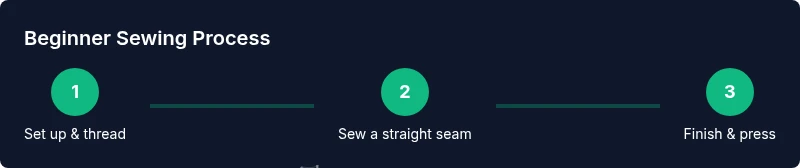
Set up workspace and power on
Position your machine on a sturdy table with good lighting. Plug in the power cord and foot pedal, then switch on the machine. Raise the presser foot to ensure the feed dog area is accessible and that you can thread without resistance. Take a moment to adjust the needle position and select the beginner settings (straight stitch, moderate speed). This setup prevents needle strikes and helps you control fabric feeding from the start.
Tip: Keep the workspace free of clutter and avoid reaching over the presser foot while the needle is moving. - 2
Thread the machine and wind a bobbin
Threading the machine and winding a bobbin are foundational steps you’ll repeat often. Start by winding the bobbin and inserting it in the bobbin case as per your manual. Then thread the upper path—needle, thread guides, and tension disks—without twisting the thread. Test by sewing a short scrap to verify stitches and tension before moving on.
Tip: Use a scrap of fabric to test stitch quality before you sew on your project. - 3
Attach the presser foot and select a stitch
Lower the presser foot and attach the correct foot for straight stitching (often the standard foot). Choose a straight stitch at a medium length (about 2.5 mm) and a slow to moderate sewing speed. Why this matters: a consistent stitch improves fabric control and reduces jams, especially for beginners working with medium-weight fabrics.
Tip: Always test a line on scrap fabric before stitching a real seam. - 4
Prepare fabric, pins, and seam allowances
Cut your fabric to a simple size for practice, then press the edges to flatten. Align the fabric pieces with right sides together and pin along the seam line, leaving a consistent seam allowance (commonly 1/4 inch for beginners). Remember to remove pins just ahead of the needle to prevent breakage.
Tip: Pin perpendicular to the seam line so you can remove pins as you sew without rearranging fabric. - 5
Sew a straight seam and backstitch
Begin sewing slowly, guiding the fabric with your hands—don’t push or pull. Sew a straight line, then backstitch a few stitches to secure the seam. Stop with the needle in the down position to reposition fabric without losing alignment.
Tip: Pause occasionally to check that your seam line remains aligned with the edge of the fabric. - 6
Finish, trim, and press
Finish the seam, trim loose threads, and press the seam flat. Practice pressing on the same fabric to learn how heat and pressure affect fabric behavior. This step cements the habit of finishing like a pro and prevents puckering in later projects.
Tip: Set the iron to the appropriate fabric setting and use a pressing cloth for delicate fabrics.
Your Questions Answered
What is the first thing I should learn when starting sewing machine lessons?
Start with threading, bobbin winding, and basic straight stitches. These fundamentals unlock most beginner projects and prevent early frustration.
Begin by threading the machine and winding a bobbin, then practice straight stitches to build a solid foundation.
Do I need an expensive machine to begin learning?
Not at all. A reliable, basic machine with straight stitch capability is sufficient for beginners. Upgrade later as your projects become more complex.
You don’t need a fancy machine—just a dependable one that can do straight stitches to start.
What are the most common mistakes beginners make?
Skipping practice, using wrong needle size, ignoring maintenance, and not testing tension before sewing can all cause issues. Start with simple tests on scrap fabric.
Most beginners struggle with tension and needle choice at first, so practice on scrap fabric to find your baseline.
How long does it take to become proficient?
Progress varies with practice frequency, but consistent sessions over a few weeks typically yield noticeable improvement in basic sewing tasks.
With regular practice, you’ll see steady progress in a few weeks as you gain confidence.
What are good beginner projects to start with?
Pillow covers, simple napkins, or a tote bag are ideal. They use straight seams and simple finishes, helping you build skill without frustration.
Try easy projects like pillow covers or a tote bag to practice straight seams and turning corners.
Watch Video
The Essentials
- Master threading and bobbin winding on scrap fabric
- Practice straight seams before tackling curves
- Maintain a safe, well-lit workspace for consistent results
- Finish each project with pressing for crisp hems and seams
- Progress to simple projects to reinforce new skills