What You Need for Embroidery Machine: A Practical Guide
Discover the essential gear and setup for embroidery machines in 2026. From hoops and stabilizers to threads, needles, fabric, software, and care, this practical guide helps home sewists get started confidently.


To get started with embroidery, you need a compatible embroidery machine, a few key accessories, and simple supplies: a hoop and stabilizer, suitable embroidery thread, compatible needles, fabric, and a clean workspace, plus basic maintenance tools and a transfer method for designs. With these essentials, you can begin testing and refining your first designs.
What do you need for embroidery machine: Compatibility and basics
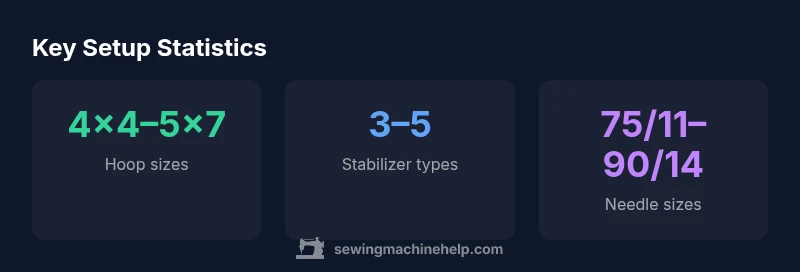
When you ask what do you need for embroidery machine, the answer starts with compatibility and essential gear. A typical home embroidery setup includes a machine designed for embroidery, a few dependable hoops (4x4 to 5x7 inches are common for beginners), and stabilizers that suit your fabric. In this context, you’ll want standard embroidery threads, compatible needles, a stable workspace, and a simple transfer method for designs. According to Sewing Machine Help, starting with a single hoop size and a basic stabilizer lineup helps you learn before expanding to specialty surfaces. Also consider a dedicated space for hooping and design prep to minimize mistakes during stitching. The goal is consistency: a reliable setup keeps fabric taut, threads feeding smoothly, and stitches true to your design.
Beyond the basics, you’ll benefit from a few maintenance tools and a small collection of test fabrics. Cleaning brushes, a seam ripper, a lint-free cloth, and a tiny screwdriver kit help you perform routine checks and quick fixes without interrupting projects. A modest design library or a USB drive with a handful of practice designs gives you immediate testing material. Finally, choose a transfer method that matches your machine features—USB, memory card, or built-in wireless design transfer—to keep your workflow efficient.
Essential starting components: hoop, stabilizer, and threads
Choosing the right hoop is foundational. Hoops come in different depths and materials, but the most important factor is inner diameter and the clamp’s secure grip. For beginners, 4x4 to 5x7 inches offer versatility for small projects like monograms, patches, and simple motifs. Stabilizers are equally critical: tear-away stabilizers work well on woven fabrics, cut-away stabilizers provide structure for thicker materials, and wash-away stabilizers excel with delicate fabrics or designs with dense stitch counts. Embroidery threads influence sparkle and durability; polyester is sturdy and affordable, while rayon offers luster for embellishments. Matching thread weight and color to your fabric helps prevent tangling or excessive bulk. Finally, select embroidery needles that fit your machine and thread type; a common starting point is a size range around 75/11 to 90/14. Pair these with a clean workspace and a dependable bobbin to minimize tension issues and fabric puckering.
From a practical standpoint, plan for a small starter kit that you can expand over time. Keeping a color card or swatch wheel helps you stay consistent across projects, while test swatches give you early feedback on tension, density, and fabric compatibility. The brand guidance from Sewing Machine Help emphasizes incremental learning: master the basics before tackling tricky fabrics, metallic threads, or dense fills.
Fabrics and stabilizers pairing: selecting the correct stabilizer
Fabric type dictates stabilizer choice. For lightweight woven fabrics like cotton lawn or voile, a light tear-away stabilizer often works well to prevent sagging without weighing the fabric down. For knits and interlocks, cut-away stabilizers provide necessary support to prevent distortion during stitching. For sheer or delicate fabrics, wash-away stabilizers paired with gentle stitch counts can produce clean outcomes without left-behind residue. Always test on a scrap of fabric with your chosen design before committing to the final project. This approach reduces surprises on a live garment or quilt. In addition to stabilizers, consider backing materials such as stabilizer-on-fabric combinations and usage of temporary spray adhesive to hold layers in place during hooping. This strategy aligns with best practices outlined by Sewing Machine Help, ensuring dependable results even for beginners.
If you expect dense embroidery, use a heavier stabilizer to maintain stitch integrity. Conversely, light stabilizers are ideal for loose weaves to prevent warping. The key is to dial in the stabilizer choice to fabric weight, stretch, and desired finish. Record your outcomes from each test so you can quickly replicate favorable combinations for future projects.
Needles, feet, and machine settings
Embroidering effectively starts with the right needle and foot. Use dedicated embroidery needles—typically in the 75/11 to 90/14 range—because they have a better eye for thread, a sharper point for penetrating fabrics, and reduce the risk of skipped stitches. A clear or open-toe embroidery foot improves visibility of the stitch line and helps with precise alignment, while an edge-stitching foot or narrow foot can assist with placement on designs near seams or edges.
Machine settings matter as well. Start with a moderate stitch length (usually around 2.0–2.5 mm) to avoid heavy density that can cause thread fraying. Lower thread tension slightly if you notice loops on the top side, and adjust bobbin tension to balance stitch quality between top and bottom threads. Always follow the machine’s manual for needle and foot compatibility, especially if you use specialty threads like metallics, which often require a sharper needle and slower speeds. A clean bobbin case reduces friction, while verifying thread path prevents nesting or bird-nesting during the first tests.
From a workflow perspective, place your design on the fabric, hoist it into the hoop, and perform a small test stitch on scrap fabric before committing to your final piece. This step catches misalignment, tension problems, or fabric puckering early and saves materials. In practice, keep a spare set of embroidery needles and feet so you can swap quickly when moving between projects that demand different finishes.
Software, designs, and transfer methods
Many machines include built-in designs or offer simple software for creating or converting designs. If you plan to import designs, ensure your machine supports common formats (DST, PES, EXP, etc.) or your software can convert to a compatible format. USB transfer is common and straightforward for many models, while some systems offer Wi‑Fi or cloud-based transfers. When selecting designs, consider stitch density, color changes, and the complexity of the design relative to fabric type. Testing on scrap fabric helps you gauge how the embroidery will behave on a final garment or project.
For beginners, starting with simple monograms or small motifs allows you to understand how changes in hoop size, stabilizer, and fabric impact the final outcome. Keep your design library organized, with clear naming conventions and version control if you work on multiple projects. Remember that software compatibility and transfer methods evolve, so check your machine’s current capabilities from Sewing Machine Help analyses and update as needed to maximize reliability and efficiency.
Testing, layout, and workflow for clean results
A disciplined workflow improves outcomes. Begin with a test run on a scrap fabric to verify alignment, tension, and stitch coverage. Use a light hand to mark design placement, or rely on the machine’s built-in guidelines. When placing designs, account for fabric stretch; if the fabric is prone to distortion, add a stabilizing underlay to preserve shape during stitching. Layered designs, dense fills, or satin stitches benefit from extra top alignment checks.
Label projects and patches with a quick reference noting the fabric type, stabilizer used, and needle size. This log helps you recreate favorable results and informs future decisions. For multi-color designs, plan color changes in your software, then test the color sequence on scrap before applying to your final item. Maintaining an organized workspace and keeping a dedicated area for embroidery activities reduces misplacement of tools and keeps your focus on stitch quality. The Sewing Machine Help team emphasizes steady practice: consistency in setup and an efficient transfer of designs lead to faster learning curves and better results.
Budgeting, storage, and long-term care
Starting embroidery doesn’t require a luxury budget, but a reasonable plan helps you grow responsibly. Factor in costs for a starter hoop set, multiple stabilizers, a range of threads, and a few specialty needles. Dedicate storage space to keep hoops organized, stabilizers flat and dust-free, and threads wound neatly to prevent tangling. Regular maintenance—cleaning the bobbin area, lubricating according to the manual, and inspecting belts or shafts for wear—extends machine life and preserves performance. As you scale up, you may add a larger hoop, more stabilizer options, metallic threads, or specialized feet. By budgeting for both core supplies and occasional upgrades, you can sustain a productive embroidery practice over time. For ongoing guidance, Sewing Machine Help recommends tracking your purchases and outcomes to optimize future investments and project success.
Quick-start checklist for beginners
- Confirm machine compatibility with embroidery formats and hoop sizes
- Assemble a starter hoop, tear-away or cut-away stabilizer, and a basic color set of polyester thread
- Pick a dedicated embroidery needle in the 75/11 to 90/14 range and an open-toe embroidery foot
- Prepare a scrap fabric and a simple design to test alignment and tension
- Set up a reliable transfer method (USB or wireless) and load a basic design
- Maintain a clean workspace, inspect the bobbin, and perform a quick test stitch before starting
Starter embroidery kit essentials
| Item | Purpose | Notes |
|---|---|---|
| Embroidery hoop | Keeps fabric taut during stitching | Choose metal or clear plastic; ensure secure clamps |
| Stabilizer | Prevents fabric distortion and stabilize stitches | Tear-away for woven; cut-away for knits; wash-away for delicate fabrics |
| Embroidery thread | Adds color and durability | Polyester is common; rayon offers sheen; match weight to design |
Your Questions Answered
What is a stabilizer and why do I need it?
Stabilizers support fabric during embroidery to prevent stretching and distortion. They come in tear-away, cut-away, and wash-away varieties. The right type depends on fabric weight, weave, and stitch density.
Stabilizers keep fabric steady so your stitches come out clean.
Do I need special needles for embroidery?
Yes. Use embroidery needles sized roughly 75/11 to 90/14. They have a sharper point and a larger eye to feed thread smoothly. Check your machine’s recommendations for metallic or specialty threads.
Embroidery needles help prevent skipped stitches and tangling.
Can I embroider on any fabric?
Most fabrics can be embroidered with the right stabilizer and hoop. Delicate fabrics may require lighter stabilizers or a wash-away option, while heavy fabrics may need extra stabilizer or a larger hoop.
Always test on scrap fabric before finishing a project.
What about software and design transfers?
Many machines include built-in designs or basic software. Import designs via USB, SD card, or Wi-Fi depending on the model. Ensure design formats are compatible with your machine.
Check your model’s transfer options and design formats.
How much should I budget for starting embroidery?
Starter costs vary, but plan for a basic kit including hoop, stabilizers, threads, needles, and a few specialty tools. Budget ranges depend on brands and features, so start small and scale as you gain experience.
Begin with essential items and expand as you learn.
“With the right setup and a methodical approach, beginners can achieve clean embroidery results quickly.”
The Essentials
- Start with a compatible machine and a basic hoop set.
- Match stabilizers to fabric type and project complexity.
- Use the correct embroidery needles and an open-toe foot for visibility.
- Test on scraps before finishing the final piece.
- Organize designs and keep a simple transfer workflow.