How Much Does a Sewing Machine Cost in 2026? A Practical Guide
Discover current price ranges for sewing machines in 2026, from entry-level to computerized models. Learn budgeting tips, compare brands, and avoid hidden costs when shopping.


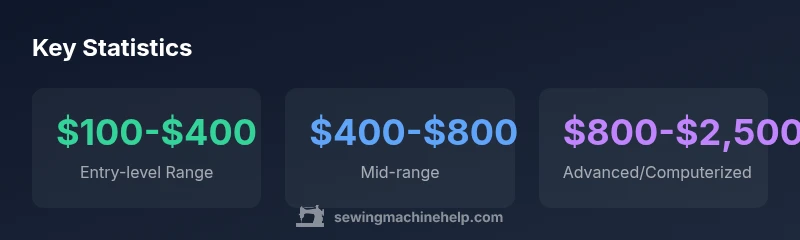
The typical sewing machine price in 2026 ranges from about $100 to $3,000, depending on features and build. Basic mechanical models usually land in the $100-$400 zone, mid-range machines in $400-$800, and computerized or industrial units can exceed $1,000 or much more. Consider whether you need embroidery or heavy fabrics features to decide.
How price affects the question of how much does a sewing machine cost
When you ask how much does a sewing machine cost, price is driven by build quality, motor power, stitch options, and the presence of computerized controls. In 2026, entry-level mechanical models start around the low hundreds, while mid-range machines offer more features for a few hundred dollars more. Higher-end computerized units often command well over a thousand dollars, reflecting added capabilities. The decision often comes down to what you plan to sew, how often you’ll use the machine, and whether you value bells and whistles over reliability. For beginners, it’s often wise to start with a solid, basic model and upgrade later if you need more stitches or faster performance.
Price ranges by machine type
Prices vary by machine type. Here are typical ranges in 2026 to help gauge value, with notes on where the price anchors are in basic features vs heavy-duty capabilities. Basic mechanical machines often top out around $300-$400, while mid-range electronic models with more stitches and better presser feet commonly fall in the $400-$800 range. Computerized machines with advanced embroidery or quilting functions tend to sit between $800 and $2,500, and high-end industrial or sewing and embroidery centers can exceed $2,500, sometimes reaching into the $6,000-plus realm for professional-grade units. These ranges assume new units from reputable brands and do not account for sales, bundles, or used-market discounts. When evaluating costs, compare the included features: stitch variety, automatic thread cutting, speed, needle threader, and warranty period.
Hidden costs to consider beyond sticker price
The sticker price is only the starting point. Plan for essential and optional add-ons that can significantly affect total cost. Common extras include a wider selection of presser feet, embroidery libraries, extension tables, extra bobbins, specialty needles, thread sets, and a sturdy carrying case. Don’t forget ongoing costs like replacement needles, thread, oil or lubricant, and routine maintenance. Taxes, shipping, and extended warranties can also push the final bill higher. A thoughtful bundle often saves money in the long run, but only if you know which items you truly need.
Buying channels: new vs used vs refurbished
New machines come with full warranties and the latest features, but price a premium. Used machines can offer substantial savings, especially for reliable mechanical models, but they require careful inspection for wear, motor burn, and timing. Refurbished units from reputable dealers can balance cost and reliability, often including a warranty. When buying used or refurbished, request a live test run, verify stitch quality, and ask about the service history. If you plan to sew regularly, investing in a new basic model may pay off in fewer repairs.
Budgeting for a complete setup
A practical budgeting approach separates the machine from the essential accessories. For a reliable beginner setup with a basic machine, plan for around $150-$350 for accessories (needles, bobbins, a starter thread kit, and feet). If you want a more complete starter bundle with a few specialty feet and a modest thread collection, $350-$700 is common. For advanced embroidery or quilting capabilities, budget an additional $200-$600 for compatible threads, stabilizers, and software-ready features. Always allocate a small reserve for tax and shipping when shopping online.
Maintenance costs and long-term value
Maintenance affects long-term cost and machine longevity. Regular cleaning and oiling, plus occasional professional servicing, can extend life and preserve performance. Expect minor maintenance costs in the range of $50-$150 per year, depending on usage and the service chosen. Higher-end machines may still require occasional tune-ups that can cost more, but their longer service life often justifies the investment. A well-maintained machine retains value and reduces the likelihood of costly repairs.
Practical buying tips for beginners
To decide how much to spend, start by listing your most frequent sewing tasks, then identify the features you truly need (stitch options, speed, needle threader, automatic thread cutting). Set a realistic budget that includes essential accessories and a quiet warranty buffer. Compare brands on reliability, customer support, and local access to service. Don’t be swayed by flashy marketing; prioritize durability, ease of use, and the availability of spare parts.
How to compare offers and read the fine print
When evaluating offers, read the fine print on warranties, return policies, and included accessories. Warranties vary widely in length and what they cover (labor, parts, wear items). Look for bundled foot sets and starter threads, but beware of upsells that inflate the final price. If you’re shopping online, verify handling fees, taxes, and shipping timelines. A solid return policy minimizes risk if the machine doesn’t meet your expectations.
Price ranges by machine type and intended use
| Machine Type | Typical Price Range | Best For |
|---|---|---|
| Basic Mechanical | $100-$300 | Beginner projects, simple stitches |
| Electronic/Mechanical | $300-$700 | More stitches, ease of use |
| Computerized | $800-$2,500 | Advanced features, automation |
| Industrial/Heavy Duty | $2,000-$6,000 | Professional use, high-volume sewing |
Your Questions Answered
What factors most influence the price of a sewing machine?
Brand, features, type, warranty, and after-sales support all influence price. Higher-end brands and computerized features add to cost, but they may offer longer warranties and better service. Assess your needs to determine if the extra features justify the price.
Brand and features drive price. Decide which features you’ll actually use before paying for extras.
Is it better to buy new, used, or refurbished?
New machines come with full warranties and latest features. Used or refurbished units can offer savings but require careful inspection for wear. If budget is tight, a vetted refurbished model can be a smart middle ground.
If budget is tight, consider refurbishments from reputable sellers after a thorough check.
Do reputable brands always cost more?
Not always. Some reputable brands offer competitive pricing on entry-level models. Price should be weighed against features, warranty, and service options rather than brand alone.
Brand matters, but focus on features and support too.
What should a beginner realistically budget for?
For a reliable starter setup, plan $200-$500 for a basic machine plus essential accessories. If you want more stitches or embroidery, expect to add $200-$600 for upgrades and supplies.
Begin with a solid, budget-conscious starter kit and scale up as you sew more.
Are there hidden costs besides the machine price?
Yes. Accessories (feet, needles, threads), thread bundles, bobbins, maintenance, taxes, shipping, and possible extended warranties can add up. Budget for a starter bundle plus a small maintenance buffer.
Plan for accessories and maintenance to avoid surprises.
When is it worth paying extra for computerized features?
If you plan extensive embroidery, quilting, or automatic features, the investment pays off. For simple sewing tasks, a basic mechanical model is usually sufficient and cost-effective.
Computerized features help with complex tasks; for basics, skip them.
“"Prices reflect not just the machine, but the long-term value of reliability, warranties, and service support. Start with a solid, budget-conscious model, then upgrade as your projects grow."”
The Essentials
- Know your needs before budgeting to avoid overspending.
- Expect price tiers by machine type: basic mechanical, electronic, computerized, industrial.
- Factor in essential accessories to determine true cost.
- New vs used can save money but carries risk; inspect used machines carefully.
- Maintenance is a long-term cost that affects total value.