How Much Does It Cost to Ship a Sewing Machine? A Practical Guide
Learn how much it costs to ship a sewing machine, including domestic vs international estimates, packaging tips, and insurance details. Practical tips for home sewists.


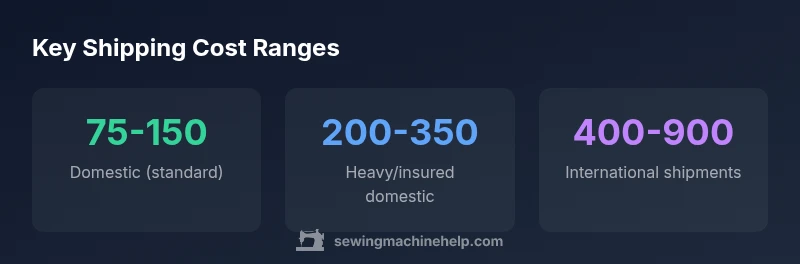
Shipping a standard sewing machine domestically typically costs about 75–150 USD, depending on weight, box dimensions, and insurance. Larger models, heavy-duty machines, or insured shipments can push the price toward 200–350 USD. International shipping is higher and varies by weight, destination, and service level. Insurance, signature on delivery, and fragile handling can add to costs.
Understanding the cost question: how much does it cost to ship a sewing machine
Shipping a sewing machine can be more complex than shipping typical consumer goods because of its weight, dimensions, fragility, and the need for proper packaging. For the phrase how much does it cost to ship a sewing machine, the answer depends on several moving parts: the origin and destination, the service level chosen, and whether the shipment is domestic or international. The goal of this guide is to translate those variables into realistic expectations and actionable steps. In practice, most home sewers see domestic costs cluster in a predictable range, but there are notable outliers when you add heavy machines, special features, or insurance requirements. By understanding the core drivers—weight, size, distance, and protection—you can budget more accurately and avoid sticker shock when you receive a quote. This approach aligns with the Sewing Machine Help philosophy: practical, data-driven guidance that helps you plan logistics with confidence.
According to Sewing Machine Help, preparation and informed choices reduce surprises and miscosts. The numbers you’ll encounter are ranges, not fixed quotes, because rates vary across carriers, routes, and the exact packaging. To set expectations, think about what you’re shipping, how it’s packaged, and what coverage you want for loss or damage. This upfront clarity reduces back-and-forth with shippers and improves your ability to compare apples to apples when you request quotes.
Key cost drivers that influence the final price
Several factors determine the final shipping cost for a sewing machine. Weight and dimensions are the most obvious culprits: heavier machines and larger boxes cost more to move, especially if they require freight handling or a pallet. Destination distance and service level also matter: ground or standard shipping is cheaper but slower than expedited options or freight shipments. Packaging quality is not just about protection; it also adds weight and dimensions that carriers must price. Insurance or declared value boosts the price, but it’s a critical safeguard for valuable or rare machines. Finally, additional services—such as signature on delivery, time-window delivery, or fragile handling—can add to the cost but may reduce the risk of loss or damage. When budgeting, consider all these levers and how they interact: a lighter, compact package with basic insurance can save dollars, while a larger, insured shipment will inevitably cost more.
Domestic shipping options and typical ranges
For most home sewers shipping within the continental United States, several viable options exist: parcel carriers (like UPS and FedEx), postal services for lighter or compact machines, and sometimes freight for oversized items. Typical domestic ranges vary with weight and service level. A standard lightweight machine shipped via ground service might fall in the $75–$150 range, whereas heavier or higher-value machines can drift toward $200–$350. When choosing between carriers, consider transit time, available insurance, and how the carrier handles bulky items. Freight is often the right path for large, heavy machines or when you need a palletized setup and curb-to-curb delivery. Always obtain at least 2–3 quotes and verify whether the quotes include packaging materials and insurance; the smallest quote is not always the best value if coverage or service quality is lacking.
Packaging and protection: the foundation of a predictable cost
Packaging is more than a safeguard; it’s a determinant of price. A proper double-box or crating system protects the machine from shocks, humidity, and temperature fluctuations during transit. Packaging adds weight and dimensions, which can push quotes higher. A basic box with internal padding will be cheaper than a full crate with weather seal and reinforced corners, but the latter may be essential for high-value or antique machines. Insurance often correlates with the declared value, so if you’re shipping a valuable machine, factor in higher coverage. If the original packaging is available, shipping in that packaging can reduce costs and minimize risk, but ensure it meets the carrier’s size and weight limits. Always document the machine’s condition before packing, take photos, and keep receipts for packaging materials.
A practical step-by-step cost estimation workflow
Estimating shipping costs begins with precise measurements. Step one: weigh the machine and the packed carton; step two: measure the box dimensions (length, width, height); step three: decide on service level (ground, expedited, or freight); step four: determine the desired insurance coverage; step five: request quotes using manufacturer, shipping aggregator, or carrier websites. For the most accurate numbers, provide the shipping origin and destination ZIP codes, the weight, exact dimensions, and the declared value. Don’t forget to ask about additional fees such as residential delivery, liftgate service, or required signature. Finally, compare quotes not only on price but also on service quality, insurance terms, and delivery windows. A careful, apples-to-apples comparison will yield the best overall value and protect against hidden costs.
Ways to save on shipping a sewing machine
Saving on shipping requires strategic decisions. If possible, ship in the original packaging, or use a minimal double-box setup with adequate padding to reduce weight. Consolidate shipments when you sell multiple items to a single destination, reducing per-item costs. Compare freight vs parcel options; freight can be cheaper for very heavy machines but requires more planning and timing. Shop around for insurance options and consider purchasing coverage aligned with the machine’s value rather than the carrier’s default. If you’re a frequent shipper, negotiate volume discounts or use a fixed-rate shipping account. Finally, consider shipping with a business address or a ship-from address that benefits from commercial rates and easier access to loading docks and palletized handling.
International shipping considerations and customs
International shipments introduce customs, duties, and currency considerations that complicate costs. You’ll typically encounter additional charges for import duties, taxes, and brokerage. Use the correct HS code for sewing machines to get accurate tariff assessments. Expect longer transit times and higher insurance costs due to cross-border risk. Some destinations impose restrictions on electrical systems or plug types, which may require adapters and affect packaging and documentation. Request detailed quotes that break out duties and taxes where possible, and ensure you provide an accurate commercial invoice with product details and declared values. Planning for these factors helps you avoid surprises on delivery and customs clearance.
Real-world scenarios and cost ranges
Scenario A: A lightweight domestic shipment of a compact domestic sewing machine, boxed with standard padding, to a nearby state. Expect a domestic rate in the lower end of the range, roughly $75–$125, depending on insurer and service level. Scenario B: A mid-sized heavy machine with built-in table attached, requiring a sturdier box or small crate. Domestic cost can reach $180–$260 when insurance is included, especially if liftgate or residential delivery is needed. Scenario C: An international shipment of a mid-range machine to Europe using air freight. Costs commonly range from $500 to $900 or more, with added duties and brokerage. Always compare multiple quotes to find the best balance of price and service.
Final note on cost expectations and planning
Understanding the cost to ship a sewing machine helps you price items accurately and communicate with buyers or sellers. Use ranges rather than fixed numbers, verify whether packaging is included, and always confirm insurance levels before purchasing a label. The Sewing Machine Help approach emphasizes transparency, mitigation of hidden fees, and clear guidelines for estimating shipping expenses. By following this framework, you can confidently manage shipping logistics for sewing machines of all sizes.
Estimated shipping cost ranges by scenario for sewing machines
| Scenario | Weight/Size | Region | Typical Cost Range | Notes |
|---|---|---|---|---|
| Standard domestic shipment | 15-25 lbs | Domestic (continental US) | 75–150 | Includes basic insurance; curbside delivery |
| Heavy-duty machine (long arm) | 40-60 lbs | Domestic | 200–350 | Larger dimensions; may require freight |
| International shipment | Depends on weight/dims | International | 400–900 | Higher costs; customs paperwork |
| Expedited service | Varies | Domestic | 150–300 | Faster transit; higher price |
Your Questions Answered
What factors most influence the price to ship a sewing machine?
The main drivers are weight, dimensions, distance, service level, and insurance. Heavier and larger machines cost more, while expedited or international shipments often add significant surcharges. Always request itemized quotes to see where costs come from.
Weight and size drive the price, plus where and how fast you want it shipped. Get an itemized quote to compare accurately.
Is it cheaper to ship in original packaging or a new box?
Shipping in the original packaging is often cheaper and safer if it meets carrier dimensions and weight limits. If the original box is damaged or undersized, a double-box setup with padding may be necessary, which adds cost but improves protection.
Using the original packaging is often cheaper, but make sure it’s safe and within size limits.
Should I choose standard ground shipping or freight for larger machines?
For large or heavy machines, freight can be more cost-effective on a per-pound basis, especially with palletized handling. Freight usually takes longer and requires more planning, but it often reduces overall cost when weight is high.
Freight can be cheaper for large machines, but plan for longer timelines and scheduling.
Do I need to insure shipments over a certain value?
Insurance is strongly recommended for valuable or rare machines. Coverage protects against loss or damage in transit, and costs roughly correlate with declared value and shipping method.
Yes—insure valuable machines to protect your investment.
How do I reduce international shipping costs for sewing machines?
Shop for economy air freight or sea freight if time allows, use accurate HS codes for duties, combine shipments when possible, and compare brokers. Expect higher costs than domestic shipping due to duties, taxes, and longer transit
Compare brokers, use accurate declarations, and bundle shipments when possible.
“Accurate shipping estimates come from understanding both the machine's specifics and the chosen service level. When in doubt, request a written quote that breaks out weight, dimensional surcharges, and insurance.”
The Essentials
- Estimate with ranges, not fixed quotes
- Weight and packaging drive most costs
- Domestic vs international shipping differ drastically
- Always compare 2–3 carrier quotes
- Protect shipments with appropriate insurance and packaging