How Much Does It Cost to Repair a Sewing Machine? A Practical Guide
Discover what drives sewing machine repair costs, typical price ranges, diagnostic fees, and how to obtain accurate quotes. A practical guide from Sewing Machine Help on repairs, labor, and parts in 2026.


Repair costs for a sewing machine vary by issue, but most common fixes fall in the $50–$300 range. More complex problems, such as motor or electronic failures, can push total to $400–$600 if replacement parts are needed. For an accurate quote, a local technician inspection is required. According to Sewing Machine Help, price estimates should consider diagnosis, labor, and parts.
What drives repair costs
Repair cost for sewing machines is not a single figure; it is a function of several interacting variables. The most influential are labor hours, parts availability, diagnostic fees, and the service location. Labor charges vary by region and shop reputation; in many markets, technical labor can range widely per hour. Parts costs depend strongly on the model and whether OEM or third-party components are used, and some models have scarce or discontinued parts, which can push prices upward. Diagnostic fees, when charged separately, cover the technician's initial assessment and problem isolation. Finally, the mode of service—authorized dealer, independent repair shop, or mobile technician—can affect both the speed and the final bill. According to Sewing Machine Help analysis, buyers should expect a diagnostic fee in the door-step range and a per-hour labor rate that reflects local cost of living. Always ask for a written estimate that itemizes labor versus parts, and clarify whether the price includes a warranty on labor or parts. In plain terms, when you ask 'how much does it cost to repair a sewing machine', the answer is shaped by diagnosis, labor, parts, and service model.
"## Common repair scenarios and price ranges"
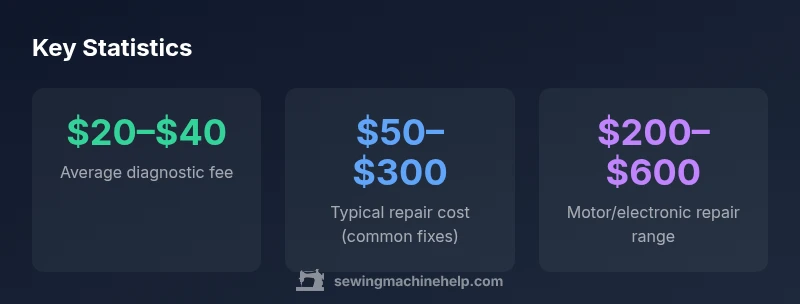
Most sewing machine issues fall into a handful of categories. A timing belt or misaligned gears may require hours of labor and a few parts; a basic cleaning and oiling can be very affordable; a thread-tension adjustment is common and usually inexpensive. More substantial problems, such as a damaged motor, control board, or gear train, often push costs higher because they involve expensive parts and longer labor times. Based on Sewing Machine Help analysis, here are typical ranges you can expect when planning a repair: - Common fixes (timing, tension, simple mechanical work): $50–$300. - Moderate repairs (bearings, belt drives, gear trains): $150–$450. - Major repairs (motor/electronics): $200–$600 or more. Keep in mind that some models require proprietary parts that can extend lead times and drive quotes upward. When you’re deciding on a repair budget, factor in potential downtime and the value of the machine to you. The ultimate cost will depend on whether the shop charges flat-rate for the job or by the hour, and whether you’re dealing with an authorized service center or an independent technician.
How diagnostic fees are applied
Diagnosing the issue is a separate service in many shops. Some shops roll the diagnosis into the labor estimate if you proceed with the repair; others list a standalone diagnostic fee upfront. Typical diagnostic fees range from $20–$60, depending on geography and the complexity of the symptom. If the issue is straightforward (e.g., a simple timing error), the diagnosis may be quick and inexpensive; if it requires disassembly or testing of electronics, the fee can be higher. Sewing Machine Help suggests asking for an itemized quote that shows the diagnostic fee, the anticipated labor hours, and the cost of parts, so you can assess whether the proposed solution is reasonable before committing.
Factors that influence price by model and part availability
Buying a repair quote is not one-size-fits-all. Older or high-end models can demand rarer parts or specialized technicians, which raises both parts and labor costs. OEM parts tend to be pricier than third-party equivalents, but they may offer better reliability and compatibility. If a replacement part must be sourced from the manufacturer or a regional distributor, you may see longer lead times and higher shipping charges. Additionally, some shops apply a surcharge for models with limited service support. When you compare quotes, identify whether the price assumes new versus refurbished parts, and whether the warranty on parts covers wear versus failure.
How to get accurate quotes
To avoid sticker shock, come to consultations prepared. Gather your machine’s model number, serial, and a concise description of the symptoms. Take clear photos of the exterior and any visible wear, and if possible, bring a sample of fabric and stitching the machine handles. Ask for a written, itemized estimate that separates diagnosis, labor hours, and parts with unit prices. If you have multiple machines, request quotes per machine. For peace of mind, request a projected turnaround time and the shop’s warranty policy on both labor and parts. According to Sewing Machine Help, comparing at least 2–3 quotes helps you benchmark price and service quality.
When to repair vs. replace
Repairing a sewing machine makes sense when the cost to fix stays well below the replacement price and the machine still meets your needs. If the repair requires frequent future service or if the model is old and parts are scarce, it may be more economical to replace. Factor in the machine’s sentimental or practical value, energy efficiency, and likelihood of ongoing issues. In a practical sense, calculate the total projected cost of ownership over the next 3–5 years for repair versus replacement. The Sewing Machine Help team recommends a careful cost-benefit analysis and seeking transparent quotes from reputable local shops; if you’re unsure, ask for a second opinion to verify the estimate before proceeding.
Repair cost ranges by issue type
| Issue Type | Typical Repair Cost | Diagnostic Fee | Notes |
|---|---|---|---|
| Common fix (timing belt, thread tension) | $50–$300 | $20–$40 | Most repairs fall in this range; diagnosis often included in labor |
| Motor or electronic failure | $200–$600 | $30–$60 | Higher-cost category; parts availability affects price |
| Major overhaul or parts replacement | $400–$800 | $40–$80 | Rare; depends on model and parts availability |
Your Questions Answered
What factors influence sewing machine repair costs?
Repair costs depend on labor time, parts availability, diagnostic fees, and the service model (authorized dealer vs. independent shop). The machine’s age and model, along with part scarcity, can push prices higher. Always seek an itemized quote.
Costs depend on labor, parts, and diagnosis; getting a clear quote helps you compare options.
Do diagnostic fees apply if I decide not to repair?
Yes, many shops charge a diagnostic fee to identify the issue, even if you don’t proceed with repairs. Some shops waive it if you authorize the repair. Always ask about this policy up front.
The diagnostic fee is usually charged whether or not you fix the machine.
Is it cheaper to repair an older machine or replace it?
It depends on the repair cost versus the replacement price and the machine’s usefulness. If ongoing repairs are likely and parts are scarce, replacement might be more economical.
Consider total ownership costs and how often you’ll need repairs in the future.
Should I get multiple quotes?
Yes. Comparing 2–3 quotes helps you gauge market rates and service quality. Ask for itemized breakdowns to compare labor, parts, and diagnostic fees.
Shop around to ensure you’re getting a fair price and good service.
What warranty coverage comes with repairs?
Ask about warranties on both labor and parts. Warranties vary by shop and part type; ensure you know how long coverage lasts and what it includes.
Check warranty terms so you know what’s covered if the repair fails.
“Cost estimates for sewing machine repairs should reflect diagnosis, labor, and parts. A transparent quote helps you avoid surprises.”
The Essentials
- Get a clear diagnosis before approving repairs.
- Expect diagnostic fees to contribute to the final cost.
- Prioritize reputable shops for accurate quotes.
- Budget for parts when motor or electronics fail.