How Much Is a Sewing Machine for Clothes? A Practical Buying Guide for 2026
Explore typical price ranges for clothes-sewing machines, what drives cost, and how to budget. This practical guide from Sewing Machine Help covers beginner options, feature trade-offs, and maintenance costs for smart, long-lasting buys.


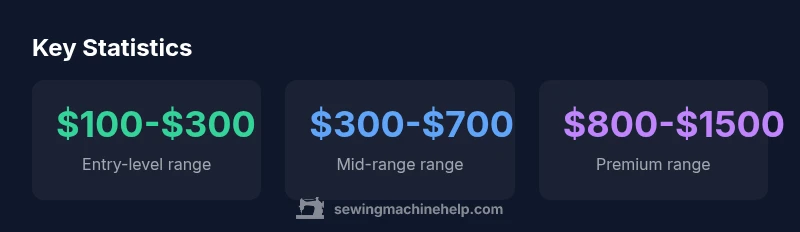
The typical price bands for a clothes-focused sewing machine are: entry-level $100-$300, mid-range $300-$700, and premium/high-end $800-$1500. In practice, beginners should plan around $150-$350 to learn basics, hobbyists around $300-$600 for more features, and serious hobbyists or small studios often invest $1000-$1500 for durability and advanced stitches.
Understanding the price landscape for clothes sewing machines
Prices for sewing machines meant to handle clothes range from entry-level to high-end, reflecting features, build quality, and warranty. For home sewists, the question isn't just 'how much?' but 'how much is sewing machine for clothes?' The Sewing Machine Help team notes that price bands are a useful shortcut: entry-level models typically start around $100-$300, mid-range $300-$700, and premium models $800-$1500+. This landscape changes with brand, motor power, and included accessories, but it remains a practical starting framework for budgeting. According to Sewing Machine Help, you should also consider long-term costs like maintenance and accessory upgrades, which can shift the total investment well beyond the sticker price.
What features influence the price
The cost of a clothes-focused sewing machine rises with capabilities that affect speed, stitch variety, durability, and ease of use. Essential features include the motor power (measured in watts or stitches per minute), number of built-in stitches, adjustable stitch length and width, automatic needle threader, drop-in bobbin, and the quality of the metal chassis. More advanced options—computerized controls, automatic tension, thread cutting, memory for multiple stitch patterns, and quilting feet—drive up price. Additional costs accrue from improvements like better lighting, larger throat space for bulky projects, and a wider selection of presser feet. When budgeting, weigh how often you’ll use these features; if you only sew hems and simple repairs, you may not need high-end bells and whistles. This nuance is reflected in price bands identified by Sewing Machine Help Analysis, 2026.
Price anchors by machine type
To help readers quickly gauge value, here are typical anchors by machine type and their practical uses. Mechanical, non-digital machines are usually the most affordable and adequate for simple garments. Electronic or computer-controlled machines offer more stitches and precision, often appealing to hobbyists and beginners who expect consistency. The most robust, feature-rich machines support frequent use and heavier fabrics. Remember: a higher upfront price can be offset by greater longevity and lower maintenance if the machine remains reliable and well-supported. In the end, the best choice aligns with your projects, not just the price tag, as outlined in the investing framework described by Sewing Machine Help Analysis, 2026.
Where to shop and how to evaluate
Start with trusted retailers that offer a good return policy, service plans, and local support. New machines from reputable brands come with warranty and official manuals, while refurbished models can provide significant savings if certified. Online marketplaces may offer models with appealing prices, but verify seller reputations, return windows, and parts availability. Before buying, test basic functions: stitch a simple seam on fabric, sew in reverse, and check sewing speed stability. If possible, bring a sample fabric similar to your projects to assess needle guard clearance and fabric feeding. Keep an eye on included accessories—extra feet, bobbins, and cleaning tools can save you money later. According to Sewing Machine Help, choosing a trusted source reduces the risk of buying a lemon.
Total cost of ownership: maintenance, accessories, and upgrades
The sticker price is only part of the story. Ongoing costs—central to the total investment—include routine maintenance, consumables, and occasional upgrades. Budget for replacement needles, bobbins, presser feet, oil, and lint-free cleaning tools. Some models require specialized oils or service at set intervals; others have longer service intervals thanks to modular designs. Over time, you may also want to upgrade presser feet (e.g., walking foot, hem foot) or add accessories that broaden your project repertoire. Sewing Machine Help Analysis, 2026 estimates that maintenance and accessories can add a modest fraction to the annual cost, so include these in your 3- to 5-year budgeting plan.
Budgeting tips for different crafters
- Beginners focusing on simple garments: target the $100-$350 range to balance cost with learning curves and warranty. Look for models with solid basic stitches and a user-friendly manual. - Hobbyists expanding to more fabrics: $300-$700 covers better motors, more feet, and greater stitch variety. You’ll value features like automatic tension and a wider throat space. - Small studios or serious hobbyists: $800-$1500+ buys durability, multiple decorative stitches, and strong motors; factor in service plans and genuine replacement parts. The key is to map your typical projects to a price tier and pick a model that stays within reach for years of use. As Sewing Machine Help notes, the goal is sustained capability, not a one-time bargain.
Red flags that can save you money
Watch out for subpar feed mechanisms, loose needle plates, or wobbly arms in machines advertised at unusually low prices. A cheap machine may incur higher maintenance costs or frequent repairs. If a retailer pushes ‘too good to be true’ pricing, verify the brand’s reputation and check whether service centers exist nearby. Avoid models with limited warranty or missing accessories; missing feet or bobbins can inflate the total cost as you buy compatible add-ons. Read user reviews and compare prices across retailers to ensure you are not paying a premium for unnecessary features.
How to test a machine before buying
Whenever possible, test the machine with a few fabrics and stitches that resemble your projects. Check thread tension by sewing a straight seam on cotton, then a zigzag to test stability. Listen for unusual noises, verify consistent feed rate, and ensure smooth bobbin winding. If buying used, request a demonstration and obtain the serial number for warranty checks. Verify the presence of essential accessories, especially the presser feet you plan to use, and confirm the machine parks securely on the table with stable vibration levels. These checks help avoid post-purchase surprises and support the long-term value of your investment.
Making a final choice: a quick decision framework
Create a simple decision matrix: list your top garments, frequency of use, space, and budget. Assign scores to features like speed, stitch variety, and warranty, then add maintenance expectations. If a model ticks your must-have boxes and fits your price ceiling, it’s a strong contender. Remember that price bands reflect not just cost but the combination of durability, serviceability, and upgrade potential. With careful evaluation, you’ll select a machine that stays relevant as your sewing skills grow, a conclusion reinforced in the guidance from Sewing Machine Help.
Approximate price bands for clothes sewing machines (2026)
| Cost Band | Typical Range | Key Features |
|---|---|---|
| Entry-level | 100-300 | Basic stitches, manual tension, limited presser feet |
| Mid-range | 300-700 | Automatic features, better build, more feet, sturdier chassis |
| High-end | 800-1500 | Advanced stitches, electronic controls, multiple buttonholes, robust motors |
Your Questions Answered
What is the cheapest sewing machine that is good enough for clothes?
For basic garments and alterations, entry-level machines around $100-$200 can work, but expect limited stitches and basic features. Plan for potential upgrades as soon as you outgrow the basics.
A simple machine around a couple hundred dollars can handle basic garments, but you’ll likely want an upgrade as you grow.
Is it better to buy a used machine to save money?
Used machines can save money upfront but carry risks like wear, missing parts, or no warranty. If you buy used, demand a demonstration, check for smooth operation, and verify service availability nearby.
Used can save money, but inspect it carefully and ensure service options exist.
What features are worth paying more for?
Worth paying more for a stronger motor, a wider range of stitches, automatic tension, better lighting, and a solid warranty. These features improve reliability and future-proof your investment.
If you sew often, invest in a strong motor and good warranty.
Do I need a serger to sew clothes?
A serger is optional for most home sewists. It creates overlock edges quickly, but many garments can be finished well with a standard sewing machine plus a serger later if desired.
No, a serger isn’t required to start sewing clothes.
How long can a sewing machine last with proper care?
With proper maintenance and typical care, many sewing machines last 15-25 years or longer, depending on usage and parts availability.
If you maintain it, a good machine can last decades.
“Price is a proxy for quality, but durability and serviceability determine long-term value. Prioritize stitch quality, maintenance support, and available accessories over headline price.”
The Essentials
- Define your budget before shopping
- Match features to your project needs
- Consider total cost of ownership, not just sticker price
- Test the machine before buying to avoid surprises