How Much Is a Juki Sewing Machine? Price Guide 2026
Explore current price ranges for Juki sewing machines, understand what affects cost, and get practical buying guidance for home sewists and beginners in 2026.


Typically, a basic new Juki sewing machine ranges from about $250 to $700, while mid-range models with more features sit around $700 to $1,200, and professional-grade machines can exceed $1,200. Prices vary by features, whether the machine is new or refurbished, and whether it’s purchased from a retailer or direct from the manufacturer. Related costs like extended warranties or service plans may apply.
How pricing is shaped for a Juki sewing machine
To answer how much is juki sewing machine, start with what typically drives price: model tier, feature set, build quality, and how intensely you plan to use the machine. For home sewists, Juki's entry-level options usually cover basic stitch functionality; these models deliver a lower price point that appeals to beginners and casual crafters. Mid-range machines add more stitches, automatic threading, better presser-foot control, and stronger motors, which raises the price but often delivers better long-term value for projects like garment construction or quilting. At the top end, professional-grade or industrial-style Juki machines emphasize robust speed, heavy-duty frames, and advanced presser-foot systems; those models command higher prices but are built to withstand frequent, labor-intensive use. When evaluating cost, consider not only the sticker price but also shipping, tax, warranty terms, and whether the retailer includes maintenance accessories. According to Sewing Machine Help, buyers should map their project needs to a price tier to avoid overpaying while ensuring reliability.
Price ranges by model tier in 2026
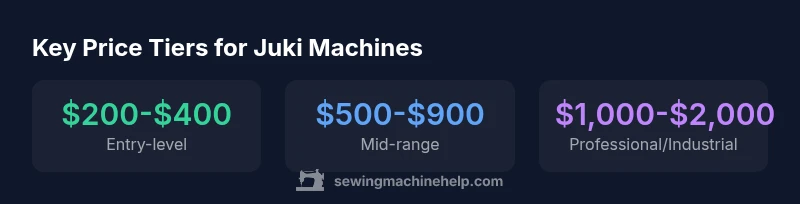
Prices vary widely by model and where you buy. In 2026, entry-level Juki machines typically range from around $200 to $400, delivering basic fabrics handling and essential stitches. Mid-range models often fall in the $500 to $900 range, offering more stitch options, automatic features, and better speed control. For serious hobbyists or small-business use, expect to invest roughly $1,000 to $2,000 for professional-grade machines with durable frames and faster speeds. Remember that refurbished or used units can be significantly cheaper, sometimes half the price of a new model, but they may come with shorter warranties and limited accessory sets. Some retailers also offer bundles that include extra feet, bobbins, and protective covers, which can alter the effective price. These ranges are meant as a guide for budgeting and comparison and will vary by region, retailer promotions, and whether you buy directly from the manufacturer. Always verify current prices at multiple authorized sources.
Factors driving price variations beyond the sticker price
Beyond the sticker price, several factors shift the final cost: whether the machine is new or refurbished, the presence of bundled accessories, warranty length, and the seller’s pricing strategy. Authorized dealers often price competitively but may include added-value perks like free shipping or extended warranties. Direct-from-manufacturer options can sometimes be cheaper upfront but might require you to purchase from specific retailers. Geographic differences, local taxes, and seasonal promotions also impact the bottom line. If you’re weighing a given model, compare total cost of ownership over several years, not just the initial sticker price. For budget-conscious buyers, refurbished units from reputable dealers can offer substantial savings with warranties, keeping overall value high.
How to compare models without overpaying
Create a short list of must-have features (e.g., number of stitches, automatic needle threader, speed control) and a nice-to-have feature set. Use official product specs from multiple retailers to confirm consistency. Check warranty terms and what they cover, then factor shipping and tax into your total. Read user reviews focusing on reliability and service experiences. If you’ll be sewing frequently, prioritize build quality and service availability. Finally, set a ceiling price based on your project needs and walk away if a model exceeds that limit unless a compelling bundle or promotion is offered.
Hidden costs and value-added options
Don’t overlook maintenance costs, foot attachments, bobbins, and specialty needles when budgeting. Some retailers offer bundles that include several presser feet, a hard case, or additional bobbins, which can raise the effective price but save on upfront accessory costs. Extended warranties or service plans can add 10–25% to the base price and may or may not be worth it depending on your usage and local repair costs. Taxes and shipping can also vary by location and retailer. Consider the total cost of ownership over 3–5 years to decide if a model’s price is a sound investment for your sewing goals.
Buying strategies for home sewists and beginners
For home sewers, look for models with intuitive threading and clear manuals. Compare at least three authorized dealers to see who offers the best bundle and warranty terms. Seasonal promotions, holidays, and clearance events can yield meaningful savings on older but still capable models. If you’re new, consider a certified refurbished unit from an authorized dealer to balance reliability with cost. Always verify compatibility of feet and accessories you already own to maximize your return on investment.
Budgeting and timing your Juki purchase
Set a realistic budget that includes a contingency for accessories and maintenance. If your projects require specific features, prioritize them in your selection and resist impulse buys during a sale if the model doesn’t meet your needs. Start with a short list of top models and watch for price dips during major sale events. Alternatively, consider a payment plan if you’re purchasing higher-end gear, but ensure the total cost of financing remains reasonable. Planning ahead helps you maximize value without sacrificing quality.
Real-world scenarios: case studies for different budgets
Case A: A beginner hobbyist aims to learn basic garment construction. A mid-range Juki in the $500–$700 range provides sufficient stitches and reliable performance, fitting a modest sewing schedule. Case B: A small quilt-and-garment maker needs higher speed and sturdier frames. A $900–$1,200 model balances reliability, speed, and feature set for frequent use. Case C: A home-based producer seeks industrial-grade durability. A professional machine priced above $1,000 may meet demand, but ensure you have a nearby service center and a compatible set of presser feet to justify the investment.
Typical price tiers for Juki machines (new)
| Model Type | Approx. Price Range (new) | Key Features |
|---|---|---|
| Entry-level Juki | $200-$400 | Basic stitches, lightweight |
| Mid-range Juki | $500-$900 | More stitches, automatic features |
| Professional/industrial | $1,000-$2,000 | Durable frames, high-speed |
Your Questions Answered
What factors most affect the price of a Juki sewing machine?
Key price drivers include model tier, feature set, build quality, warranty terms, and whether the unit is new or refurbished. Promotions and bundled accessories can also shift the final price.
Price is driven by model tier, features, and warranty terms; promotions can also affect what you pay.
Is it better to buy new or refurbished Juki machines?
New machines come with full warranties and the latest features, while refurbished units can offer substantial savings when purchased from authorized dealers with a solid warranty.
Refurbished units save money but check the warranty and dealer credibility.
How can I verify model suitability for my projects?
List your project types, stitch requirements, and fabric weights. Compare those against official specs and user reviews, then test the model in-store if possible.
Match your project needs to the model’s features and check reviews.
Do Juki machines come with warranties and what do they cover?
Most new Juki machines include a manufacturer’s warranty; coverage varies by model. Ask the dealer for the exact terms and whether extended warranty options are available.
Warranties vary by model; ask the dealer for details.
Where can I find current prices for Juki machines?
Check official Juki retailers and authorized dealers, plus reputable sewing supply stores. Compare online listings and consider bundled packages for value.
Look at official retailers and compare bundles for value.
Are there regional price differences for Juki machines?
Yes, prices can vary by country, taxes, shipping costs, and local promotions. Always compare several sources in your region to get the best deal.
Prices vary by region due to taxes and shipping; compare sources.
“Juki machines offer reliable performance across price tiers, making them a practical choice for both beginners and serious hobbyists.”
The Essentials
- Define a budget before shopping.
- Expect higher prices for more features and speed.
- Consider refurbished options from authorized dealers.
- Factor in tax, shipping, and warranty costs.
- Check official retailers for seasonal promotions.