Sewing Machine Comparison Chart: Mechanical vs Computerized
A thorough sewing machine comparison chart contrasts mechanical and computerized models across stitches, usability, maintenance, and value to help home sewists choose the right machine.


According to Sewing Machine Help, a sewing machine comparison chart helps home sewists weigh mechanical versus computerized models by evaluating stitch variety, ease of use, maintenance needs, and price. For beginners, mechanical machines often provide reliable basics at lower cost, while computerized models add built-in stitches and features that simplify complex tasks. Use the chart to align your projects, budget, and skill level with the right machine.
Why a Sewing Machine Comparison Chart Matters
A sewing machine comparison chart is a practical tool that helps home sewists cut through marketing hype and focus on what really matters for everyday use. When you compare mechanical and computerized models side by side, you gain clarity on stitch options, maintenance needs, and long-term value. According to Sewing Machine Help Team, these charts are especially valuable for beginners who want a clear path from basic repairs to creative projects without getting overwhelmed by features they won't use. The chart also reduces decision fatigue by turning subjective impressions into objective criteria such as fabric handling, foot compatibility, and availability of accessories. By documenting your typical projects and budget, you can select a machine that fits your process, from repairs to quilting. This section sets the stage for a structured, data-driven decision process you can trust over time.
Understanding Mechanical vs Computerized: Core Differences
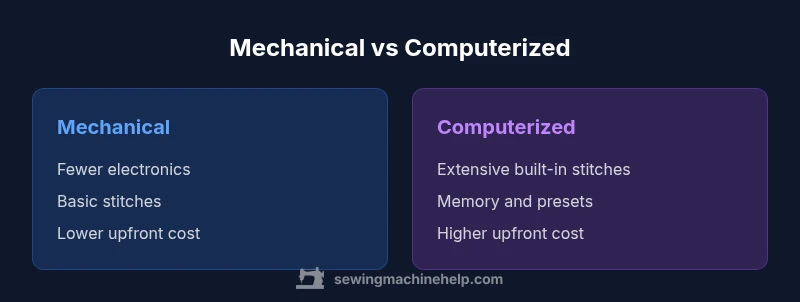
Mechanical sewing machines rely on manual controls, cams, and gears to drive stitches. They typically offer a reliable set of utility stitches, simpler maintenance, and a lower upfront price. Computerized machines incorporate LED displays, memory for stitch patterns, automatic features like needle threading, automatic bobbin winding, and sometimes device connectivity for updates. In general, computerized models provide broader stitch libraries and presets for specialty tasks, but they come with higher initial costs and more electronics to maintain. The Sewing Machine Help Team notes that the right choice depends on how you plan to sew, how often you sew, and how much you value automation versus hands-on control. Expect trade-offs in durability, repairability, and user experience between the two architectures.
Common Features to Compare in a Chart
A robust sewing machine comparison chart should track features that most hobbyists care about:
- Stitch variety and quality: basic utility stitches vs decorative and specialty stitches.
- Buttonholes: manual versus automatic; number and size options.
- Needle threading and tension controls: manual methods vs auto features and presets.
- Accessory ecosystem: included presser feet, extension tables, and compatibility with specialty feet.
- Ease of use: interface clarity, learning curve, and the availability of guided modes.
- Lighting and visibility: LED lighting and work area brightness.
- Speed control and needle stop options: how you control fabric feeding and stopping.
- Warranty and service access: parts availability and local repair support. This section helps you decide which criteria carry the most weight for your projects and budget, so your chart remains practical rather than theoretical.
How to Read the Data: A Step-by-Step Guide
Reading a sewing machine comparison chart is about translating features into real-world outcomes. Start by listing your most frequent projects (e.g., hemming, alterations, quilting, garment construction) and assign each a priority level. Then, map these priorities to the two machines you’re evaluating. For each criterion, note how well Mechanical and Computerized models meet your needs, using the chart’s values as a quick reference. Consider both short-term benefits and long-term costs, such as potential maintenance fees or accessory purchases. If you sew occasionally, a mechanical machine with a solid stitch quality might be enough; if you tackle complex projects weekly, a computerized model could save time and expand capabilities. The goal is to create a transparent, repeatable decision framework you can reuse as your sewing needs evolve.
Stitch Variety and Quality: What to Look For
Stitch variety is often the most visible difference between mechanical and computerized machines. Mechanical models provide a dependable set of utility stitches that perform reliably on common fabrics. Computerized machines expand this with decorative stitches, stretch stitches, and programmable patterns. Evaluate stitch quality by testing on different fabrics (cotton, knit, denim) and checking stitch density, evenness, and fabric grip. Look for features like adjustable stitch width and length, satin stitches for quilting, and solid buttonhole performance. Remember that versatility should align with your projects—if you rarely use decorative stitches, the extra options may not justify the cost.
Ease of Use and User Interface
A key differentiator is how intuitive each machine feels in practice. Mechanical machines often rely on physical dials and a few knobs, which many sewists find straightforward and durable. Computerized machines offer guided menus, backlit screens, and automatic features that simplify setup and operation. The Sewing Machine Help Team highlights that a user-friendly interface reduces time spent fiddling with tension or threading, especially for beginners. When evaluating, test the learning curve with a simple project and assess how quickly you can adjust settings for different fabrics. A machine that lets you accomplish more with less distraction can dramatically improve your sewing experience.
Durability, Maintenance, and Longevity
Durability often reflects construction quality and serviceability. Mechanical machines usually have simpler internal components with fewer electronic parts, which some users find easier to service at home. Computerized machines incorporate electronics and sensors, which can add maintenance considerations and the need for occasional software updates. Both types require routine oiling, needle changes, and tension checks. The key is to understand maintenance frequency and the availability of parts in your region. The Sewing Machine Help Team recommends keeping a regular maintenance schedule and seeking repair services from authorized providers when needed. A well-maintained machine from either category can last many years with proper care.
Price vs Value: How to Assess Return on Investment
Price is not the only determinant of value. Mechanical machines typically sit in the low-to-mid hundreds, while computerized models can range from the mid-to-high hundreds. When comparing price, assess the features you actually use—more stitches, automatic tension, and memory may justify a higher upfront investment if you save time and expand capabilities over the long term. Consider long-term costs, such as presser feet, extension tables, and potential servicing. The goal is to chart not just the price tag but the total value you receive for your typical projects and how that aligns with your budget.
Accessories and Foot Pedals: The Hidden Value
Presser feet and accessories substantially influence a chart’s value. A basic machine might include a standard foot, zipper foot, and buttonhole foot, while higher-end options offer a wider assortment and specialty feet for techniques like quilting, leather, or denim projects. Automatic needle threaders or lube kits can add immediate usability, especially for beginners. Evaluate how many feet are included, the availability and cost of add-ons, and whether the kit aligns with your intended projects. A generous accessory package can compensate for a higher upfront price and increase long-term satisfaction.
Brand Ecosystems: After-Sales Support and Availability
No chart is complete without considering after-sales support. Look for reputable warranties, easy access to spare parts, and an active user community or local service centers. Computerized machines may rely on software updates and vendor support, while mechanical machines lean on parts supply and community forums for troubleshooting. The Sewing Machine Help Team emphasizes choosing a brand with robust local service options and timely parts availability, which reduces total ownership costs and downtime when issues arise.
Example Comparison: Mechanical vs Computerized in Action
In a practical scenario, a beginner who sews lightweight garments weekly may prefer a mechanical machine for its straightforward operation and reliability. A hobbyist who quilts and experiments with decorative stitches might benefit from a computerized model’s expansive stitch library and programmable options. By testing both in-store on fabrics you commonly use and weighing the criteria that matter most to you, a chart reveals which machine better aligns with your workflow, project mix, and budget. The goal is not to chase every new feature but to identify the option that reliably delivers the results you want with the least friction.
How to Create Your Own Sewing Machine Comparison Chart
Start with a clear list of priorities: stitch variety, ease of use, maintenance, and price. Gather data from at least two reputable sources (retailers, brand-website specs, and independent reviews). Create a simple table with two columns for the mechanical and computerized options and a row for each feature. Score each feature on a 1–5 scale, then add up the totals to identify the stronger overall option. Revisit the chart after trying machines in person and adjust your weighting if your needs evolve. This repeatable process keeps your decision grounded in your actual sewing practice.
Quick Start Checklist for Buyers
- Define your project focus (quilting, garments, repairs).
- List must-have features (stitch variety, buttonholes, auto-threading).
- Check warranty length and service availability in your area.
- Test machines with fabrics you use most often.
- Consider the total cost of ownership, not just the sticker price.
- Review the accessory kit to ensure you get value for your intended projects.
Comparison
| Feature | Mechanical Sewing Machine | Computerized Sewing Machine |
|---|---|---|
| Stitch Variety | Limited utility stitches | Extensive built-in stitches including decorative and stretch stitches |
| Automatic Features | Manual threading and tension control | Automatic threading, tension presets, memory options |
| Buttonholes | Manual buttonholes | Automatic buttonholes with multiple sizes |
| Ease of Use | Mechanical controls with tactile feedback | Digital interface with presets |
| Maintenance | Fewer electronics, simpler maintenance | More components to service, occasional software updates |
| Price Range | low-to-mid hundreds | mid-to-high hundreds |
| Best For | Budget-conscious beginners, straightforward projects | Advanced hobbyists, diverse projects including quilting |
| Durability/Repairability | Fewer electronics, often easier at home service | Electronics can add repair complexity but often robust builds |
Strengths
- Clear value for beginners on a budget
- Fewer electronics mean simpler maintenance
- Proven reliability and easy repairability
Negatives
- Limited stitch options for creative projects
- Fewer automated features can slow complex tasks
- Lower resale value when features become outdated
Computerized models generally deliver greater versatility and convenience; mechanical machines excel in affordability and simplicity.
Choose computerized if you want a broad stitch library and time-saving presets. Opt for mechanical if you value cost, durability, and hands-on control.
Your Questions Answered
What is a sewing machine comparison chart?
A sewing machine comparison chart is a structured side-by-side tool that evaluates two or more machine types on common criteria such as stitch variety, usability, maintenance, and price. It helps you make data-driven decisions instead of relying on marketing claims.
A sewing machine comparison chart is a side-by-side tool that helps you compare machines by features like stitches and ease of use.
Which machine is best for beginners?
For many beginners, mechanical machines offer straightforward operation and cost efficiency. Start with essential stitches and manual controls to build confidence, then consider upgrading as you tackle more complex projects.
For beginners, a basic mechanical model often works best to learn the fundamentals.
Do computerized machines automatically sew perfectly every time?
Computerized machines provide automated features that improve consistency on many projects, but perfect results still depend on fabric type, needle choice, and proper setup. Practice and testing remain important.
Even with automation, you still need to test and adjust for different fabrics.
Can a mechanical machine handle modern fabrics?
Many mechanical machines handle common fabrics well, but very stretchy or delicate materials may benefit from the tension control and stitch variety of computerized models.
Most basic fabrics are fine on mechanicals, but stretch fabrics can be easier with computerized features.
Are maintenance costs higher for computerized models?
Computerized machines can incur higher maintenance costs due to electronics and potential software needs, but good warranties and local service can mitigate this.
Yes, electronics can raise maintenance costs, but good service helps a lot.
How often should I oil a mechanical machine?
Oil intervals depend on usage and manufacturer guidelines. Regular oiling and annual servicing typically keep a mechanical machine operating smoothly.
Oil it as recommended by the manual and get it serviced annually.
The Essentials
- Identify your project mix before comparing machines
- Weigh long-term value over upfront cost
- Test machines with your typical fabrics
- Consider warranty and local service access
- Choose a chart format you can update over time