Sewing Machine Price Guide for 2026
Understand sewing machine price ranges, what features drive cost, and smart buying tips for home sewers in 2026. Learn how to balance upfront price with durability, support, and long-term value.


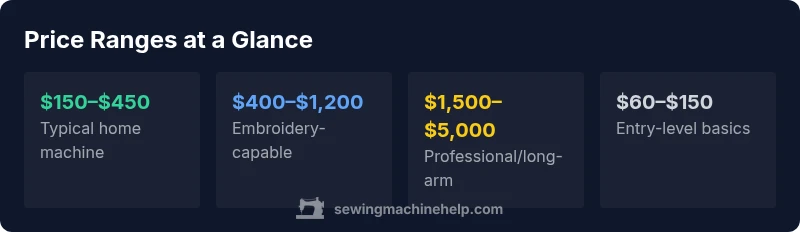
According to Sewing Machine Help, the sewing machine price spectrum spans from about $60 for entry-level models to several thousand dollars for professional machines. For most home sewists, midrange machines typically cost $150–$600, with embroidery-capable models often $400–$1,200. Value comes from reliability and features you actually use, not just sticker price.
Why Sewing Machine Prices Vary\n\nPrices reflect more than the brand name. Mechanical machines with a handful of stitches are cheaper because they use fewer electronics and simpler components. Computerized models add automated controls, on-screen settings, memory functions, and better thread tension management, which raises the upfront cost but can improve consistency and reduce frustration over time. The intended use matters: a casual sewer doing occasional repairs needs less investment than someone quilting regularly or running a small home business. The distribution of price is also shaped by parts availability and service networks; cheaper machines that are hard to service can incur higher maintenance costs later, offsetting initial savings.\n\nSewing Machine Help notes that price signals quality and longevity, but it’s not the only metric. Look for engines built for your workloads, quality of stitches, and how easily you can get replacement parts. Always consider warranty length and what the warranty covers, since that reduces risk if components wear faster than expected.
boldedNote3
Price bands by machine category
| Category | Typical Price Range | Notes |
|---|---|---|
| Entry-level | 60–150 | Basic stitches, light use, minimal computerization |
| Midrange | 150–600 | Balanced features, durability, better tension control |
| Embroidery-capable | 400–1200 | Built-in designs, computer controls, higher speed |
| Professional/Long-arm | 1500–5000 | Heavy-duty, quilting, production work |
Your Questions Answered
What is the typical price range for a new beginner sewing machine?
Most new beginners can expect to pay around $150–$350 for a reliable starter machine. Cheaper models exist but may lack durability or essential features. Compare features and warranty when evaluating options.
Beginner machines typically run about one hundred fifty to three hundred fifty dollars.
Are refurbished sewing machines a good value?
Refurbished machines can offer solid value if the seller is reputable and the machine comes with a warranty. Verify the refurbishment process and parts availability before buying.
Refurbished machines can be a smart buy if they come with a warranty and clear history.
How does embroidery capability affect price?
Embroidery features add cost: built-in designs or external modules push price higher. Expect roughly $400–$1,200 for built-in embroidery, with higher-end modules increasing costs further.
Embroidery features usually raise price, but weigh whether you’ll use them.
Is it worth buying a used machine from a private seller?
Used machines can save money, but assess wear, needle plate, and timing. If possible, have a knowledgeable person inspect it and confirm the tension and stitch quality.
Used machines can be great value if inspected and serviced.
What should I consider besides price?
Warranty length, service network, availability of spare parts, and compatibility with your preferred accessories are crucial for long-term value.
Don’t forget warranty and service when choosing.
What is the best way to compare prices across retailers?
Set a budget, list must-have features, compare models across trusted retailers, and watch for bundles or included accessories. Read retailer policies on returns and warranty.
Compare features and warranties across trusted sellers to find real value.
“Price is a signal, not the sole metric of value. The right choice balances upfront cost with durability, support, and repairability.”
The Essentials
- Define your budget before shopping for features
- Consider total ownership costs, not just sticker price
- Prioritize features you will actually use
- Shop during seasonal sales and bundles
- Check warranty and service network before buying