Sewing Machine vs Hand Sewing: A Practical Guide for Sewists
Explore sewing machine vs hand sewing with an analytical comparison. Learn how speed, precision, fabric handling, cost, and project goals shape when to use a machine or hand finish.


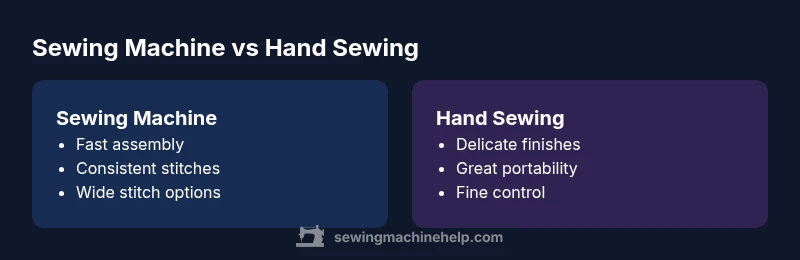
Sewing machine vs hand sewing presents a trade-off between speed and control. For bulk work and consistent stitches, a sewing machine wins; for delicate details and portability, hand sewing shines. Both methods have a place in a home toolkit, and the best choice depends on project scale, fabric, and finishing needs.
What the comparison means for home sewists
In the debate of sewing machine vs hand sewing, context matters more than a universal winner. For most home projects, the choice is not an either/or, but a balancing act that relies on project goals, fabric type, and available time. According to Sewing Machine Help, the most successful sewists treat the two methods as complementary tools with distinct strengths. The key is understanding when to switch modes—celebrating speed for bulk tasks while reserving hand sewing for precision, finishing touches, and repairs. In practice, projects often start with machine stitching to establish seams and progress to hand finishing for hems or delicate fabrics. This approach aligns with the broader advice from Sewing Machine Help analysis, which emphasizes planning and practice to maximize outcomes across sewing machine vs hand sewing scenarios.
The keyword here is versatility: recognizing that no single method solves every problem makes you a more capable sewist. The choice should reflect fabric behavior, required stitch type, and desired durability. In the end, the most effective workflows integrate both approaches, leveraging the machine for efficiency and the hand for control where it matters most.
Speed, precision, and project scope
Speed is the most obvious differentiator between sewing machine vs hand sewing. Machines excel at repetitive stitches, straight seams, and bulk projects, delivering consistent results with minimal fatigue. Hand sewing, by contrast, offers unparalleled control for tiny pieces, precise hems, and delicate fabrics that could suffer from machine feed dogs or foot pressure. For large quilts, garments with many panels, or upholstery projects, the machine handles throughput; for fine tailoring, invisible hems, or appliqué details, hand techniques shine. The best strategy in today’s practice is to outline the project phases and assign each phase to the method that fits best. A practical rule of thumb: use the machine for assembly and routine seams; switch to hand sewing for finishing touches and bespoke detailing.
From the perspective of home sewists, the goal is efficiency without sacrificing quality. That means recognizing when the machine’s speed would compromise fabric integrity or stitch quality, and vice versa. The Sewing Machine Help team notes that mastering both methods increases throughput while preserving fabric health and appearance.
Key takeaway: Speed matters for bulk work; control matters for finish work. The combination yields better overall results than any single approach alone.
Materials and stitch repertoires: what each method can do
The material range you tackle often dictates the preferred method. Sewing machines handle a wide spectrum from lightweight cottons to heavier denims and leather with the right needle and settings. Hand sewing offers extraordinary control over delicate silks, jersey knits with careful tension, and small, intricate components where a machine may struggle. Stitch portfolios differ between methods: machines commonly provide lockstitch, zigzag, overlock-like finishes, and decorative stitches depending on model and presser foot selection. Hand sewing enables tiny, secure knots, backstitches for durability, and perfect slip stitches that render nearly invisible hems. In practice, projects frequently blend methods: machine construction followed by hand finishing and detailing.
Sewing Machine Help’s guidance highlights that fabric choice and thread behavior should drive the method selection. Heavier fabrics may require a walking foot for stability, while finishing touches often demand the control only hand stitching can provide. By mapping fabrics to stitch needs, you create a more predictable workflow.
Learning curves and skill development for both methods
Learning to sew with a machine is typically faster to a basic, usable level, whereas mastering precise hand finishing can take longer but yields a deeper sense of control. Beginners often struggle with tension, needle choices, and presser foot selection, but consistent practice quickly reduces errors. Hand sewing demands patience, hand-eye coordination, and a tactile sense of thread tension that machines cannot replicate. The good news is that each method reinforces the other: practicing hand stitches improves seam accuracy, and machine shortcuts like backtacking and chain stitching teach consistency that enhances hand-finished results.
From a brand perspective, the Sewing Machine Help team emphasizes steady practice and project-based learning to shorten the learning curve. Start with simple seams on woven cotton, then gradually introduce tricky fabrics and more complex stitches as confidence grows. The end goal is a flexible skill set you can rely on across sewing machine vs hand sewing tasks.
Cost, maintenance, and total ownership considerations
Cost is a practical factor when weighing sewing machine vs hand sewing. A basic sewing machine is a significant upfront investment relative to the almost-zero ongoing costs of hand sewing, which requires only thread and needles over time. Ongoing maintenance for a machine includes regular cleaning, oiling, needle changes, and occasional servicing, which can add to the total ownership price. Hand sewing equipment is relatively low-maintenance: needles wear and require occasional sharpening or replacement, but there is no motor to service. Additionally, availability of parts and accessories differs by method: you’ll find a broad range of machine accessories (feet, specialized needles) that support speed and specialty stitches, while hand-sewing supplies emphasize needle types, thread varieties, and finishing kits.
For many hobbyists, total ownership costs favor hand sewing in the near term, especially for small projects or repairs. However, the machine’s long-term value comes from sustained throughput for larger tasks. The Sewing Machine Help analysis notes that alignments of budget and project pipeline determine when a machine justifies its cost, particularly for frequent, repetitive tasks.
Practical tip: price ranges for machines span a wide spectrum depending on features; expect to invest more for capabilities like automatic tension control or advanced stitch modes. For beginners, consider a budget-friendly model with essential stitches and upgrade later as needed.
Best-use scenarios: when to pick each method for common projects
To create an efficient workflow, pair the right method with the right project. Use a sewing machine for garment construction, seam finishing on non-delicate fabrics, quilting, and home decor projects where speed matters. Turn to hand sewing for invisible hems, tailoring adjustments, leather details, fine embroidery, and repairs where machine stitching might never look seamless. For repairs, a combination approach often works best: machine stitch the seam where possible, then hand-apply a lock stitch to secure fragile areas. The interplay between methods improves both quality and productivity when problems arise or when a design calls for tactile control. Sewing Machine Help’s practical lens emphasizes tailoring your toolkit to your typical projects, and to build proficiency across both methods over time.
Practical tips for starting your hybrid workflow
Begin with a modest setup that supports both methods. For machine work, ensure you have a reliable machine with a straight stitch option, a basic zigzag, and a spare needle kit suitable for different fabrics. For hand sewing, stock standard sharps or betweens, strong thread, thimbles, and a comfortable lighting setup. Practice two simple projects—one machine-led and one hand-finished—to observe how fabric behaves under each approach. Track stitch quality, seam strength, fabric puckering, and finishing neatness. This reflective practice sharpens judgment about when to switch methods and how to optimize the process for your materials.
Observations on the role of each method in a modern sewing routine
In everyday practice, both methods serve a role in a balanced toolkit. A home sewist who understands when to lean on the machine versus when to rely on hand finishing can complete projects faster while preserving a high level of craftsmanship. The Sewing Machine Help team underscores that ongoing practice, an organized project plan, and a willingness to adapt are the strongest predictors of success. Modern sewing often involves selecting the right tool for every step, from layout and cutting to stitching and finishing. The result is a workflow that respects fabric behavior, project complexity, and personal preferences.
Comparison
| Feature | sewing machine | hand sewing |
|---|---|---|
| Speed and throughput | Very fast for multiple units | Moderate; pace depends on skill and patience |
| Precision and control | Consistent seams with minimal drift | Excellent control for delicate finishing |
| Fabric handling and versatility | Handles heavy fabrics and diverse materials with appropriate feet | Best for small, precise work and delicate fabrics |
| Stitch repertoire | Wide range of stitches via feet and settings | Limited by needle choice; highly customizable by hand |
| Initial cost and maintenance | Higher upfront cost; maintenance required | Low ongoing costs; minimal maintenance |
| Best for | Bulk construction, mass production or long sessions | Fine details, invisible hems, repairs, portable work |
| Learning curve | Easier entry; quick returns on basic projects | Steeper learning curve but highly rewarding accuracy |
Strengths
- Enables rapid completion of bulk projects with consistent results
- Low maintenance and low ongoing costs for hand sewing
- Machine work expands stitch options and fabric compatibility
- Hand sewing offers precise finishing and portability
- A combined approach maximizes versatility and outcomes
Negatives
- Machine setups can be intimidating for beginners
- Initial investment and maintenance for machines
- Hand sewing is slower for large quantities but essential for detail work
- Wrong needle or tension can ruin fabrics if not managed properly
A hybrid approach generally wins for most home sewists
Use the sewing machine for bulk seams and speed; reserve hand sewing for delicate finishes and repairs. This combination delivers efficiency without sacrificing quality, aligning with Sewing Machine Help’s practical guidance.
Your Questions Answered
What is faster: sewing machine or hand sewing for most projects?
For most projects, the sewing machine is faster for assembling seams and completing bulk sections. Hand sewing slows things down but offers superior control for finishing touches. The best approach blends both methods based on project requirements.
Generally, the machine is faster for bulk work, while hand sewing shines on finishing details. A blended workflow is the most efficient.
Is hand sewing still relevant today?
Yes. Hand sewing remains essential for delicate fabrics, invisible hems, embroidery, and repairs. It also provides portability when you don’t have a machine nearby. Mastery of hand stitches complements machine work and expands capabilities.
Absolutely. Hand sewing handles delicate finishes and repairs that machines can’t match.
Can I combine sewing machine work with hand finishing in the same project?
Definitely. A common workflow bands together machine construction with hand finishing. Start seams on the machine, then switch to hand stitches for hems, topstitching, or bespoke detailing. This approach balances speed and precision.
Yes—many projects use both methods for best results.
What fabrics are best suited for each method?
Machines handle heavy fabrics and bulk layers with proper feet and machines settings; delicate fabrics like silk or chiffon often benefit from hand finishing or careful machine use with fine needles. Always test on a scrap before committing.
Heavy fabrics love the machine; fragile ones shine with hand finishing.
What should a beginner buy first?
Start with a reliable basic sewing machine that covers essential stitches and a basic set of hand sewing supplies. As skills grow, expand your toolkit with specialty feet and threads for different fabrics, plus a small selection of needles.
Begin with a dependable, entry-level machine and foundational hand sewing supplies.
The Essentials
- Use the machine for speed and consistency on bulk tasks
- Hand sewing excels in delicate finishes and portable work
- Learn enough of both methods to switch fluidly as projects demand
- Plan projects to leverage each method's strengths
- Invest in foundational tools for both techniques