How to Fix Sewing Machine Tension: A Practical Guide
Learn practical steps to fix sewing machine tension, diagnose top thread vs bobbin issues, adjust settings, and maintain your machine for consistently balanced stitches.


By fixing sewing machine tension, you’ll determine whether the issue is with the top thread or bobbin, rethread the machine, replace the needle if needed, and adjust both the top tension and bobbin tension. This guide provides safe, step-by-step checks to prevent puckering, looping, or skipped stitches. You’ll also learn fabric-specific tips and how to test with scrap fabric to confirm balanced stitches before finishing projects.
How tension works: top thread vs bobbin
Sewing machine tension is a balance between two thread systems: the top thread and the bobbin. The top thread passes through the machine’s tension discs near the presser foot, while the bobbin has its own tension that tightens or loosens as the stitch forms. When either system is off, you’ll see puckering, loops on the wrong side, or uneven stitches. According to Sewing Machine Help, most tension problems start from simple issues like incorrect threading, a bent needle, or an incorrectly seated bobbin. Understanding this balance helps you diagnose without guessing, saving time and material.
Common causes of tension issues
Tension problems aren’t always mysterious. Common culprits include an improperly threaded machine, wrong needle type or size for the fabric, a damaged needle, lint or thread caught in the tension discs, and an incorrectly wound bobbin. Also, using thread that’s too thick for the needle or fabric can cause the machine to fight with the material, resulting in inconsistent stitches. Before changing settings, check these basics: rethread path, insert a fresh needle, and verify bobbin placement.
Quick diagnosis: top thread vs bobbin thread
To quickly diagnose, sew on a scrap piece of fabric using a straight stitch. If the top thread forms loops on the underside of the fabric while the bobbin thread remains flat, the top tension is likely too loose or the threading path is incorrect. If the bobbin thread shows on the top or creates loose stitches, the bobbin tension or bobbin path may need adjusting. Keep notes of how the fabric behaved to guide the next steps.
Fixing top thread tension: step-by-step adjustments
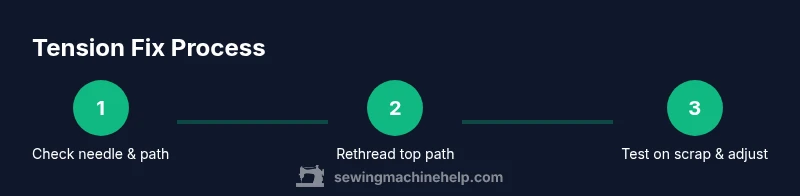
If the fabric shows puckering or the top thread loops underneath, start with the top tension. Rethread the machine path carefully from spool to needle, ensuring the thread sits properly in each guide and through the tension discs. Check the needle for burrs or a bent shaft, and replace if needed. Increase or decrease the top tension dial in small increments (usually 1/4 turn) and test on scrap fabric until the stitches lie flat with both sides balanced.
Fixing bobbin tension: adjusting the case
Bobbin tension affects how tightly the lower thread is pulled during stitch formation. If the bobbin thread creates a loose or heavy stitch, adjust the bobbin case tension screw slightly, following your manual. Rewind and reinsert the bobbin, ensuring it turns in the correct direction. Test again on scrap fabric, alternating stitch types if available. If you can’t achieve balance after small adjustments, the bobbin case or shuttle mechanism may require deeper service.
Fabric-specific tension adjustments
Different fabrics require different tension settings. Lightweight cotton typically needs a balanced top and bobbin tension, while silky or delicate fabrics may need looser top tension to prevent snagging. Heavier fabrics like denim benefit from a tighter top tension and, occasionally, a separate needle plate or heavier needle. Always test on a scrap piece and adjust gradually to avoid overshooting the correct tension.
Preventative maintenance for consistent tension
Regular maintenance reduces tension drift. Clean the tension discs and bobbin area to remove lint, oil the moving parts per your manual, and replace needles after every project or when they show any sign of wear. Keep an extra set of needles and bobbins handy, and document the fabric types you used for each project so you can create a quick reference for future tension adjustments.
Testing and confirmation: final checks
After adjustments, sew a sample swatch across multiple stitches and fabrics to confirm consistency. Look at both sides of the seam: the stitches should lie flat on top and bottom without loops. If any fabric shrinks, puckers, or stretches during seam formation, revisit the relevant tension area and re-test with scrap fabric. Consistent results across different threads and materials indicate you’ve achieved proper sewing machine tension.
Troubleshooting drift and common mistakes
If tension drifts mid-project, check for thread snagging as you sew, a bent needle, or a thread caught in the bobbin area. Re-threading from the start after any break helps ensure the path hasn’t become misaligned. When in doubt, reset to the factory tension, rethread carefully, and re-test on scrap fabric to regain a baseline.
Tools & Materials
- Sewing machine manual(Keep for model-specific tension guidance)
- Assorted needles (80/12, 90/14)(Choose based on fabric weight)
- Spools of all-purpose thread(Match weight to fabric)
- Bobbin(s)(Pre-wound and ready to load)
- Lint brush or small brush(Clean tension area and bobbin housing)
- Thread snips(Trim threads cleanly)
- Screwdriver (small flathead)(For bobbin case adjustments if needed)
- Sewing machine sewing oil(Lubricate moving parts per manual)
- Tweezers(Remove lint and stray threads)
- scrap fabric for tests(Use varied fabrics for testing tension)
Steps
Estimated time: 20-40 minutes
- 1
Power down and prepare
Unplug the machine and remove the presser foot. This keeps you safe and gives clear access to the needle and bobbin area. Gather test fabric and a scrap piece for each check.
Tip: Always start with safety and a clean workspace. - 2
Inspect the needle and path
Remove and inspect the needle for burrs or bending; replace if necessary. Rethread the upper path, ensuring thread sits correctly through guides and into the tension discs.
Tip: Even a slightly damaged needle can ruin tension balance. - 3
Check bobbin placement
Remove the bobbin, unwind, and reload correctly. Ensure the bobbin turns in the direction specified by your manual and the thread feeds into the proper slot.
Tip: A misthreaded bobbin is a common source of tension trouble. - 4
Test top-thread tension
Sew on scrap with straight stitch. If the underside shows loops or puckers, top tension may be too loose or path incorrect.
Tip: Make small dial adjustments (¼ turn) and retest. - 5
Adjust top tension
Turn the top tension dial in small increments. Retest after each adjustment to avoid overshooting the balance.
Tip: Keep notes of settings that work best for each fabric. - 6
Assess bobbin tension
If the top looks balanced but the bottom is off, adjust the bobbin case tension screw slightly. Re-sew on a scrap to verify.
Tip: Only tiny changes are needed; large moves can overshoot the balance. - 7
Try fabric-specific tests
Sew on lightweight, medium-weight, and heavy fabrics to confirm tension works across materials. Adjust top or bobbin tension as needed per fabric.
Tip: Document your fabric tests to guide future projects. - 8
Clean and lubricate
Clean lint from the feed dogs and tension area. Apply a small amount of oil to recommended points per the manual.
Tip: Over-oiling can attract lint and worsen tension. - 9
Final confirmation
Sew a final sequence across all test fabrics. Confirm stitches are balanced on both sides and free from snags. Reassemble the foot and move to your project.
Tip: Perform a final test before resuming regular sewing.
Your Questions Answered
What causes sewing machine tension problems?
Tension problems often stem from incorrect threading, a dull or bent needle, or a bobbin that's not seated properly. Dirt or lint in the tension discs can also cause uneven stitches. Start with rethreading and inspecting the needle, then move to bobbin checks.
Common causes include threading issues, a damaged needle, and bobbin placement. Start by rethreading and inspecting the needle and bobbin area.
How do I know if the top thread or bobbin is the problem?
If the stitches look good on the top but show loops or unevenness on the underside, the top tension may be off. If the bottom looks off or shows the top thread on the surface, check the bobbin tension and path.
Look at the stitch on both sides: top issues usually show on the bottom, bobbin issues on the top.
Can I fix bobbin tension without service?
Yes, with caution. Adjust the bobbin tension using the screw on the bobbin case, following your manual. If you’re unsure, seek guidance from model-specific resources before making large changes.
Yes, you can adjust bobbin tension, but do so carefully and refer to your manual.
How often should I adjust tension?
Only when you notice stitches behaving poorly. Routine maintenance and correct threading can prevent many tension issues from arising.
Adjust tension only when you see stitch problems; routine care helps prevent issues.
Does needle type affect tension?
Yes. Using the wrong needle for fabric weight or type can cause skipped stitches or tension inconsistencies. Replace worn needles promptly.
Absolutely—wrong needle type can throw off tension.
What should I do after finishing tension adjustments?
Test on scrap fabric with multiple stitches, check both sides for balance, clean the area, and oil per the manual. Only proceed to your project when stitches are balanced.
Test thoroughly on scrap fabric, then go ahead with your project.
Watch Video
The Essentials
- Identify whether top or bobbin tension is off first
- Re-thread before adjusting tension
- Test on scrap fabric to verify balance
- Regular maintenance prevents recurring tension issues