How to Make Sewing Machine Belt at Home
Learn how to make a sewing machine belt at home with careful measurements, material choices, and safe testing. This step-by-step guide covers DIY options, common mistakes, and when to opt for a genuine replacement.


This guide shows you how to make a sewing machine belt at home by identifying belt type, measuring precisely, selecting safe materials, and fitting a DIY belt. It emphasizes caution and compatibility, and offers when to choose a genuine replacement. Follow steps carefully, and only attempt DIY options if you understand the risks and your machine's pulley geometry.
Understanding belt types and specs
Sewing machines rely on belts to transfer motor torque to the needle mechanism. If you are considering how to make sewing machine belt at home, identifying the belt type before attempting a DIY repair is essential for safety and performance. Most home machines use a simple rubber, flat, or V-shaped belt, while some models employ toothed or wrapped belts. The cross-section, width, and stretch characteristics determine how the belt sits on the pulleys and how much grip is available. Start by locating the belt path in the machine and inspecting the contact surfaces: a round cross-section suggests a simple elastic belt, while a flat or toothed surface indicates a different profile. When in doubt, consult the model number in the manual or manufacturer website to confirm the exact belt type and recommended replacement options. If your goal is a one-off DIY belt, choose a material with similar elasticity and thickness, and plan for a careful fit that won’t over-tension the system. Remember: a belt that is too tight can put strain on bearings, and a belt that is too loose will slip, causing inconsistent stitch timing and skipped stitches. This section helps you recognize the most common configurations and sets the stage for reliable measurements and material choices.
Measuring for a replacement belt
Once you know the belt type, the next step is to gather measurements. Accurate measurements are critical because a belt that doesn’t fit will cause noise, mis-timing, or early bearing wear. Start by measuring the overall belt length required to loop around the pulleys without forcing the belt through tight gaps. Use a flexible string or non-stretch tape to trace the belt path along the outer edge, including any curved sections around pulleys. Mark the point where the belt would connect or join and lay the string flat to measure. Next, determine the cross-sectional profile by measuring the belt width at its widest point, and if possible, gauge the belt thickness. If your machine uses a toothed belt, ensure the tooth height and spacing match the pulley profile. Record all measurements clearly so you can compare them with a candidate replacement or a DIY belt design. Finally, check any tensioning mechanism (if present) and note whether the belt needs to accommodate a spring-loaded guide or an adjustable pulley.
Materials you can safely use
In many cases a dedicated belt of the correct type is the best option; however, if a replacement isn’t immediately available, you can explore temporary DIY materials that approximate the original belt’s cross-section. Look for a flexible material with a similar width and thickness that can endure low to moderate tension. Options include thin rubber sheets, a leather strap with a suitable width, or a polyurethane belt material that can be cut and shaped to the right profile. Avoid using flimsy plastics, fabric belts that absorb moisture, or rubber materials that crack under heat or stiffness. If you plan to join ends, choose an adhesive that cures to a strong, flexible bond suitable for belt material and temperature exposure; otherwise, maintain a continuous loop if the design supports it. Always test the material on scrap fabric first and monitor for slippage or heat buildup during operation.
Safety considerations and testing
Safety should be your top priority when experimenting with DIY belts. Unplug the machine from the power source and disconnect any foot pedal before handling moving parts. Work on a clean, dry surface to reduce risk of contaminants that can cause belt slippage. Inspect pulleys and bearings for wear before starting; worn pulleys can misseat a DIY belt and cause vibration. When installing, make sure the belt sits evenly in the grooves and that tension is balanced—neither loose nor overtight. After installation, run a very short test cycle with no fabric, listening for abnormal noises such as grinding, squealing, or repetitive chirping. If you hear any signs of distress, stop immediately and recheck the fit, alignment, and material properties. Remember that a DIY belt may behave differently than a factory belt, so monitor the machine during the first full-speed session.
Sourcing a proper replacement and when to DIY
For most sewing machines, official belts are available from the manufacturer or authorized retailers. If your model uses a standard cross-section and width, you can often source a compatible belt from third-party suppliers as well. Before ordering, confirm your machine model, the belt type (flat, V, toothed), and the pulley dimensions. If you can’t locate the exact belt, consider reaching out to a repair service or the manufacturer for guidance. A genuine replacement belt is generally more reliable, reduces risk of mis-timing, and often carries a warranty. Use DIY solutions only as a temporary measure when you must operate with an immediate deadline, and always replace with a proper belt when possible. Keep in mind that some machines are designed with specific belt materials and pulleys, so compatibility is key to long-term performance.
Common mistakes and quick fixes
Common mistakes include choosing the wrong belt type, underestimating the importance of precise length, and using overly rigid materials that can crack under heat. If the belt is too tight, you may overload the motor and wear bearings; if too loose, the belt can slip and cause uneven stitches. A frequent quick fix is to test the belt with a slow-speed rotation to feel for binding before attempting full operation. If you notice premature wear or glazing on the belt surface, reassess the material and cross-section. If you are uncertain about material safety or fit, stop and consult a professional or order a genuine replacement rather than continuing to run the machine with a questionable DIY belt.
Tools & Materials
- Measuring tape or caliper(to measure belt length and width precisely)
- Pen and notebook(record measurements, model number, and belt type)
- DIY belt material options (rubber sheet, leather strap, or PU belt)(choose cross-section and thickness that match pulleys)
- Sharp scissors or utility knife(for clean, straight cuts)
- Hole punch or awl (optional)(for adding belt holes if needed)
- Straight edge or ruler(to ensure straight cuts)
- Safety gear (gloves, eye protection)(protect hands and eyes during cutting)
Steps
Estimated time: 60-120 minutes
- 1
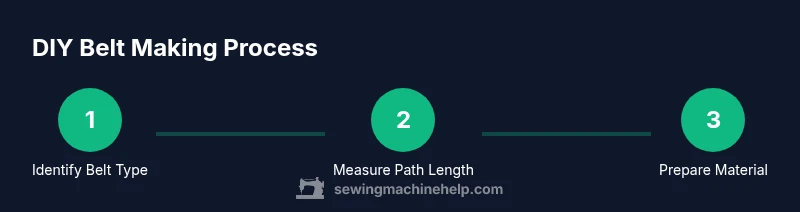
Identify belt type
Inspect the belt path and compare it to common cross-sections. Confirm whether your machine uses a flat, V, or toothed belt by examining the contact surfaces and guide pulleys. This step is crucial to avoid selecting an incompatible material later.
Tip: Check the manual or model number to verify the belt type before measuring. - 2
Measure path length
Carefully trace the belt path with a flexible string or measuring tape, following the route around all pulleys. Mark the point where the belt would connect or join and lay the string flat to measure the total length, including curves.
Tip: Keep the string taut and press it into the grooves for accuracy. - 3
Measure cross-section width and thickness
Use calipers or a precise ruler to determine the belt’s width and thickness. This cross-section information determines what material you can use and how it will seat on the pulleys.
Tip: Record readings for both belt surface and groove width for best fit. - 4
Choose material and cut to length
Select a material that matches the cross-section and elasticity of the original belt. Cut to approximate length, leaving a small margin to accommodate final fitting and any needed joins.
Tip: If you’re joining ends, leave extra length to allow a secure seam. - 5
Mark holes or prepare ends
If your belt requires holes for mounting or tensioning, mark their positions and punch carefully. For continuous loops, prepare ends to be joined without stressing the material.
Tip: Use a steady hand to avoid tearing the material at hole edges. - 6
Install and test cautiously
Slip the belt over the pulleys with the machine unplugged. Check alignment and listen for unusual noises during a slow test run on scrap fabric or a quiet cycle.
Tip: Start at a very slow speed and stop immediately if you hear grinding or slipping.
Your Questions Answered
Is it safe to make a sewing machine belt at home?
DIY belts can be attempted in a pinch, but safety and compatibility are critical. Ensure you match the belt type and cross-section, and test slowly with unplugged equipment.
DIY belts can work in a pinch, but only with careful matching and slow testing.
Will a DIY belt perform as well as a factory belt?
A DIY belt may perform temporarily but is unlikely to match the precision and longevity of a factory belt. Consider replacing with an official belt when possible.
A DIY belt may work briefly, but an official belt is usually best long-term.
What if my machine uses a toothed belt vs a smooth belt?
Toothed belts require compatible pulleys and the correct tooth profile. For smooth belts, maintain consistent thickness and elasticity.
Toothed belts need matching pulleys, smooth belts need consistent thickness.
How can I tell if the belt length is correct?
Length is confirmed when the belt loops fully around pulleys without excessive slack or overtightening. If it’s hard to fit, re-measure and adjust.
Check that the belt loops around both pulleys with minimal slack and no binding.
Can I reuse an old belt as a reference?
If an old belt shows no cracks and retains elasticity, you can use its dimensions as a reference. However, replace if there is wear.
Old belts can guide dimensions, but inspect for wear and replace if needed.
Where can I buy a replacement belt quickly?
Check the sewing machine manufacturer or specialist retailers for compatible belts. Having your model number handy speeds up the process.
Find a compatible belt from the manufacturer or a reputable retailer.
Watch Video
The Essentials
- Identify belt type before starting
- Record precise measurements for safety
- Test the DIY belt gradually at low speed
- Replace with a genuine belt if possible