Thread Jam Troubleshooting: Urgent Fix Guide
A practical, urgent step-by-step troubleshooting guide to diagnose and fix thread jams in sewing machines. Learn safe checks, practical fixes, and prevention tips from Sewing Machine Help.


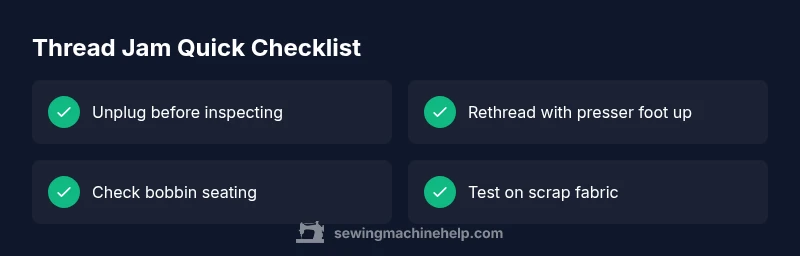
When thread gets stuck in a sewing machine, start with safety: unplug the machine, remove the needle, and clear any obvious lint. Then re-thread the top thread with the presser foot up, reseat the bobbin, and test on scrap fabric. If it still jams, consult the diagnostic flow and move to the step-by-step fixes.
Why thread jams happen and why timely action matters
Thread jams are common for home sewists, especially beginners. Most jams start with something simple like the top thread not feeding correctly or a bobbin that isn’t seated right. In many cases, the jam is a telltale signal that the threading path or tension needs quick adjustment. The phrase “what to do when thread gets stuck in sewing machine” should trigger a calm, methodical approach: stop sewing, assess, and fix with basic tools. According to Sewing Machine Help, keeping your machine clean and correctly threaded dramatically reduces jams over time, and addressing a jam right away prevents more serious damage later. This guide focuses on practical, step-by-step actions you can take today to get stitching again.
Immediate safety and first checks you should do
Safety comes first. Unplug the machine before touching anything inside the needle area. Remove the presser foot and needle to visually inspect the threading path. Check for obvious issues like a bent needle, lint buildup, or a thread caught around the needle plate. If you’re unsure, consult the manual or stop and seek professional help. The key is to avoid forcing parts or prying at metal components. With the machine powered off and unplugged, you can safely clear lint and reset the threading path without risk.
Common jam patterns and their causes
Thread jams fall into a few predictable patterns. A top-thread jam typically happens when the thread is not correctly threaded through the tension discs or guide. A bobbin jam usually results from the bobbin being wound or inserted incorrectly, or a mis-threaded bobbin case. Loose needle could also cause looped threads and drag. Another frequent culprit is lint buildup in the bobbin area. Recognizing these patterns helps you choose the right fix quickly, rather than applying trial-and-error changes that can cause more tangles.
No-tools fixes you can try right away
Start with the simplest adjustments first. Re-thread the top thread with the presser foot raised to release tension, then re-thread the bobbin and ensure it turns clockwise (or as your manual specifies). Clean out visible lint around the bobbin area with a small brush or soft cloth. Replace the needle if you see any burrs or a bent shaft, as a damaged needle can create jams. Use scrap fabric to test stitches after each fix to gauge whether the jam clears. Remember, patient, incremental steps beat forceful, random fiddling.
When to stop and call for help
If the jam persists after re-threading, cleaning, and needle replacement, you may be dealing with a deeper mechanical issue. Avoid continuing to sew as you risk damaging the hook, feed dogs, or motor. At this point, consult Sewing Machine Help's diagnostic flow or contact a certified technician. Regular service can prevent recurring jams and extend the life of your machine.
How to prevent future thread jams
Preventive care is the best defense. Keep the threading path clean and dry, replace needles regularly, and use proper thread types for your fabric weight. Store your machine with dust covers and perform routine surface cleanings. Always run a test stitch on scrap fabric after any thread changes. By building a habit of quick, gentle maintenance, you’ll reduce the frequency of jams and keep stitching smoothly.
Steps
Estimated time: 30-45 minutes
- 1
Unplug and remove the needle
Power off the machine and unplug it. Remove the needle securely to access the threading path. Inspect the needle for bending or burrs and replace if necessary.
Tip: Always unplug before touching any moving parts to avoid injury. - 2
Open bobbin area and clear lint
Open the bobbin cover, remove the bobbin, and thread path. Use a small brush to sweep out lint and loose threads from the bobbin housing and under the needle plate.
Tip: Never use a pin to pick lint—it can damage the hook. - 3
Rethread top thread with presser foot up
Raise the presser foot, rethread the machine from start to finish, ensuring the thread passes through all guides, tension discs, and the take-up lever. Cut the thread ends cleanly before testing.
Tip: A loose or misrouted thread is the most common jam cause. - 4
Check and reseat bobbin
Reinsert the bobbin with the correct rotation and thread winding direction. Ensure the bobbin case sits snugly and rotates freely. Close the cover and gently pull the thread to confirm smooth movement.
Tip: A misoriented bobbin is a frequent jam source. - 5
Test on scrap fabric
Load a scrap fabric and run a straight stitch slowly. Listen for unusual sounds and watch for looping or skipped stitches. If the fabric feeds smoothly, you’ve likely resolved the jam.
Tip: Test bit by bit; don’t push a full garment through until you’re confident. - 6
Decide on next steps
If you still see jams after these steps, consider residual mechanical issues or improper tension that requires professional servicing. Document the symptoms and steps you’ve taken for the technician.
Tip: Keeping notes speeds up diagnosis with a pro.
Diagnosis: Thread gets stuck during sewing or when starting a seam
Possible Causes
- highTop thread improperly threaded or caught in the tension discs
- highBobbin inserted incorrectly or winding tension off
- mediumBent needle or wrong needle size for fabric
- lowLint or thread debris in the bobbin area
Fixes
- easyRethread the top thread with presser foot up and the thread path clean
- easyRemove and reseat the bobbin and bobbin case; clean lint around the hook area
- easyReplace the needle with the correct type and size for the fabric
- easyGently clean the feed area and re-test; avoid forcing fabric through a jam
- mediumIf the jam persists after these steps, consult a professional technician
Your Questions Answered
What should I do first when thread gets stuck?
Unplug the machine, remove the needle, and inspect the threading path for obvious issues. Re-thread from the start and check the bobbin seating if the jam persists.
First unplug, remove the needle, and inspect the path. Re-thread from the start and check the bobbin seating if the jam continues.
Can a bent needle cause a thread jam?
Yes. A bent needle can deflect thread or hook the fabric, creating a jam. Replace with a new needle of proper type for your fabric.
Yes. A bent needle can cause jams; replace it with a fresh needle for your fabric.
Why is the bobbin thread bunching under the fabric?
This usually means the top thread isn’t forming a proper stitch, or the bobbin is mis-threaded. Check bobbin orientation and ensure the take-up lever is engaged.
Bobbin thread bunching usually means top thread isn’t forming a stitch or the bobbin is mis-threaded.
How often should I clean the bobbin area?
Clean as part of regular maintenance, especially after finishing a project or when you notice lint. A quick wipe prevents jams from buildup.
Clean the bobbin area regularly, especially after projects, to prevent jams from lint.
Is oiling required when thread gets stuck?
Oil only if your manual specifies. Most jams can be resolved with cleaning and threading adjustments; improper oiling can cause more problems.
Oil only if the manual says so; many jams fix with cleaning and rethreading.
When should I contact a professional?
If jams persist after following the diagnostic flow and step-by-step fixes, or if you notice unusual noises or binding, seek a certified technician.
If jams persist after these steps or you hear unusual sounds, contact a technician.
Watch Video
The Essentials
- Unplug before inspecting any jam.
- Rethread top thread and reseat bobbin to fix most jams.
- Replace bent needles and clean lint to prevent recurence.
- Test on scrap fabric after fixes to confirm success.