Why Your Sewing Machine Isn’t Picking Up the Bottom Thread
Urgent guide: diagnose and fix why your sewing machine isn’t picking up the bottom thread. Step-by-step checks, safe troubleshooting, and prevention tips for home sewists.


Bottom thread pickup typically fails from bobbin misplacement or faulty threading. Remove the bobbin, reseat it correctly and re-thread the lower path, then re-test. If issues persist, inspect the needle and lint in the bobbin area. This covers the most common causes quickly, so you can sew again in minutes.
Quick Diagnosis: Why the Bottom Thread Isn’t Being Picked Up
If you’re wondering why is sewing machine not picking up bottom thread, you’re not alone. The bottom thread interacts with the upper thread and the hook in a precise path; even small misalignments can stop stitches from forming. In 2026, many home sewists encounter this issue after re-threading, after a needle change, or following a cleaning session. The quickest path to a fix is to inspect the bobbin seating and threading, then confirm the needle path is clear. By understanding the interaction of the bobbin case, shuttle, and needle, you can pinpoint the likely culprit and restore stitch formation fast. You don’t need fancy tools—just patience and following the steps in this guide, with advice from Sewing Machine Help.
Key terms to keep in mind include: bobbin tension, needle tension, thread path, and lint buildup. These items commonly contribute to the problem, especially if your machine is used frequently or stored with lint in the bobbin area.
Check the Bobbin: Seating, Winding, and Path
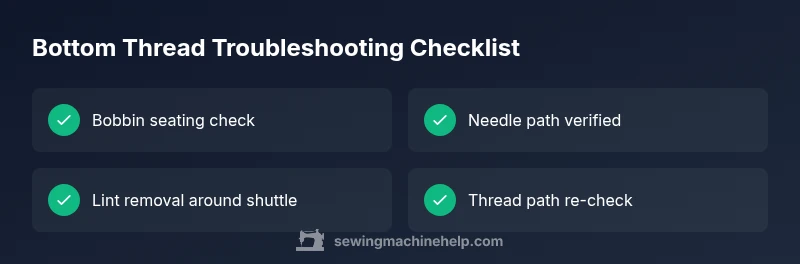
The bobbin is a frequent source of bottom-thread pickup problems. Start by removing the bobbin and the bobbin case. Check that the bobbin is wound evenly and seated in the case in the correct orientation for your model. Some machines require the thread to unwind counterclockwise when loaded; others are clockwise. After reseating, hold the thread tail and rotate the handwheel slowly to ensure the bobbin thread advances smoothly into the tension plate. If the thread pulls tight or catches, recheck the winding and seating. This step addresses the most common cause first and aligns with safe troubleshooting best practices used by the Sewing Machine Help team.
Verify Needle and Needle Plate Alignment
A bent or dull needle can pull or skip stitches, preventing the bottom thread from catching properly. Remove and inspect the needle for burrs or bending; replace with a new needle if necessary. Ensure the needle is installed in the correct direction and fully seated. Also inspect the needle plate for burrs or obstruction that could impede thread movement. After replacing the needle, re-thread both upper and lower paths and test on a scrap fabric. If the needle is loose, it can destabilize the entire threading path and cause the bottom thread not to be picked up.
Thread Path: Upper and Lower Thread Interaction
Thread path problems happen when the upper thread won’t properly crest the needle and the lower thread cannot be captured by the hook. Rethread the upper thread from the beginning, ensuring the thread seats correctly through all guides, the take-up lever, and the needle eye. Then re-thread the lower thread, making sure it feeds into the bobbin case’s tension disks. If your machine has a thread sensor, verify it is not blocked. Correct thread path alignment often resolves bottom thread pickup issues quickly, and you’ll see stitches forming as expected.
Common Causes in Everyday Use
In daily sewing, the bottom thread problem often arises from simple missteps: re-threading without fully seating the bobbin, using a damaged needle, lint accumulation, or incorrect tension settings on the bobbin case. Environmental factors like dust or hair around the shuttle can also block the hook’s ability to catch the bottom thread. If you maintain a clean bobbin area and use properly wound thread, you’ll reduce recurring problems. According to Sewing Machine Help, routine checks and modest corrections yield reliable results for most home sewers.
Quick Fixes in 5 Minutes
If time is short, perform these rapid checks: 1) unplug the machine, 2) remove and reseat the bobbin, 3) rethread the lower path with proper tension, 4) rethread the upper path and replace the needle if needed, 5) try a scrap test stitch. These steps cover the vast majority of quick failures and can be completed in minutes. Remember to test on scrap fabric to verify that the bottom thread is now being picked up and forms a balanced stitch.
When to Call a Professional
If you have followed the steps and the bottom thread still won’t be picked up, timing or hook alignment may be out of spec. These issues typically require service from a trained technician who can check shuttle timing, hook height, and gear wear. Don’t force the machine or attempt risky internal disassembly. In 2026, professional repairs remain the safest path for mis-timed or damaged mechanical components. The Sewing Machine Help team recommends scheduling a service appointment rather than risking further damage.
Prevention: Keep the Bottom Thread Happier
To prevent reoccurrence, adopt a routine: clean the bobbin area after heavy use, check needle and bobbin for wear, and recheck thread paths whenever you change tension settings. Use fresh, quality thread and wound bobbins with even tension. Periodic lubrication per your manual (and only with the recommended oil) helps preserve timing and smooth operation. Regular maintenance reduces the likelihood of bottom thread pickup issues and keeps projects moving smoothly.
Steps
Estimated time: 15-25 minutes
- 1
Power down and unplug
Always start by turning off and unplugging the machine to prevent accidental activation. This keeps you safe while you inspect the bobbin area and needle. Gather a small container for tiny parts and a clean workspace so you don’t lose screws or small pieces.
Tip: Use a bright light to clearly see inside the bobbin area. - 2
Open bobbin area and remove bobbin
Open the bobbin cover and gently lift out the bobbin. Inspect the bobbin for wear or burrs. If the bobbin is worn, replace it with a quality wound bobbin that matches your thread type.
Tip: Note the bobbin’s orientation before removing it. - 3
Check bobbin winding and seating
Examine whether the bobbin is wound evenly and seated correctly in its case. If your model requires a specific feed direction, ensure the thread unwinds in that direction. Rotate the handwheel slowly to confirm smooth movement.
Tip: If the bobbin is loose, re-seat and re-thread. - 4
Rethread lower thread path
Re-thread the lower path through the bobbin tension discs, ensuring the thread is snug but not tight. Reinstall the bobbin case, making sure the thread tail is accessible. Give a gentle pull to see if the thread advances freely.
Tip: Do not force threads through tight spots. - 5
Rethread upper path and needle
Rethread from the spool to the take-up lever, then through the needle eye. If the needle is bent or dull, replace it with a fresh one. Run the handwheel by hand to feel the stitch formation with both threads in place.
Tip: Always use the correct needle type for your fabric. - 6
Test on scrap fabric
Test by sewing a few inches on scrap fabric. Check whether the bottom thread now forms a consistent stitch. If issues persist, adjust tension wheels per your manual and retest.
Tip: Use scrap fabric to prevent waste. - 7
Assess need for professional service
If stitching remains inconsistent after thorough re-threading and needle replacement, timing or shuttle alignment could be the culprit. Schedule a service appointment with a qualified technician for a precise diagnosis.
Tip: Avoid opening the timing area yourself.
Diagnosis: Bottom thread won’t form a stitch or is not picked up by the hook
Possible Causes
- highBobbin seated incorrectly or unwound in the wrong direction
- mediumBobbin winding loose or damaged
- highNeedle inserted incorrectly or a bent needle
- lowThread under needle path jammed or lint in bobbin area
- lowTension settings misadjusted on bobbin or upper threading
Fixes
- easyRemove bobbin, reseat correctly following the manual, then re-thread the bottom thread
- easyCheck needle orientation and replace bent or dull needles
- easyClean bobbin case and shuttle area to remove lint
- easyRethread upper thread and lower thread with proper tension and alignment
- mediumIf stitch still fails, consult a service center for timing and hook alignment
Your Questions Answered
Why is the bottom thread not picking up on my machine?
Common causes include incorrect bobbin seating, improper threading, a bent needle, or lint in the bobbin area. Start by reseating the bobbin and re-threading both paths, then test on scrap fabric. If needed, replace the needle and clean the shuttle area.
Common causes are bobbin seating, threading, needle condition, or lint. Reseat, re-thread, test, and replace the needle if needed.
Can a bent needle cause bottom thread issues?
Yes. A bent or dull needle can prevent proper stitch formation and affect bottom thread pickup. Replace with a new needle of the correct type for your fabric and re-thread the machine.
A bent needle can stop the stitch from forming properly. Replace the needle and re-thread.
Should I oil the machine to fix bottom thread pickup?
Oil is part of regular maintenance but not a direct fix for bottom thread pickup. Use the manufacturer’s oil only as needed and focus on threading, bobbin seating, and needle condition first.
Oil helps maintenance, but the fix is proper threading and bobbin seating.
Why does the problem disappear after re-threading but returns later?
Re-threading often resolves a temporary misalignment, but if it reappears, the underlying cause is likely a worn needle, misadjusted tension, or a bobbin issue. Re-check all paths and consider replacing worn parts.
If it comes back, recheck needle, tension, and bobbin alignment.
Is timing a factor in bottom thread pickup?
Timing can affect bottom thread pickup, but timing problems usually require professional service. Do not attempt to adjust timing yourself unless you are trained.
Timing issues require a pro; avoid DIY timing adjustments.
Watch Video
The Essentials
- Check bobbin seating first
- Replace bent needles promptly
- Rethread upper and lower correctly
- Test on scrap fabric after each fix
- Seek professional help for timing issues