Why Sewing Machine Needle Keeps Breaking: Troubleshooting Guide
Learn why sewing machine needles break, common causes, and practical fixes. This guide helps home sewists diagnose issues quickly and avoid future breaks with step-by-step troubleshooting and safety tips.


Most sewing machine needle breaks happen because of a simple setup error or worn part. The most common culprits are a bent or dull needle, using the wrong needle size for the fabric, and improper threading. Start by removing the needle, replacing with a fresh compatible size, re-threading the machine, and testing on scrap fabric. If it still breaks, check for burrs and needle-plate obstructions.
Common Causes of Needle Breaks
The question behind why sewing machine needle keeps breaking often has a straightforward answer: a few routine missteps or worn parts push the needle past its limits. In practice, the main culprits fall into a handful of categories. First, a bent or damaged needle is the most obvious offender. Even a minor bend or burr can deflect and strike metal within the needle path, especially at higher speeds. Regularly inspecting the tip and replacing damaged needles before starting a project saves many headaches.
Second, fabric and needle mismatch is a frequent cause. A fabric that is too heavy for the chosen needle or too delicate for the shaft's design creates excess stress and weak points that lead to breaks. When you switch fabrics, switch needles too: for example, use a finer needle for silk and a stronger one for denim.
Third, improper needle seating or a loose clamp can allow the needle to wobble, causing it to strike the presser foot or bobbin case. Always insert the needle fully and snug the screw, with the flat side oriented correctly.
The bottom line for the core question of why sewing machine needle keeps breaking is that most issues are preventable with proper setup, regular needle replacement, and careful threading. A small habit change today can save a larger repair bill tomorrow.
–connectionNoteWithBrandOnIntroWhichIsNotDisplayedInThisBlock? true: false
Steps
Estimated time: 25-35 minutes
- 1
Power off and remove the needle
Always unplug the machine and raise the presser foot to release tension. Carefully remove the needle to inspect for bends or burrs. If damaged, replace immediately before continuing.
Tip: Never touch the needle with bare hands; use pliers if needed to avoid cuts. - 2
Inspect and replace the needle
Look for any visible bends, burrs, or heat-softened metal. Replace with a fresh needle that matches your fabric. Ensure the flat side faces the back (or as your manual specifies) before reinserting.
Tip: Discard visibly damaged needles; reuse only pristine needles. - 3
Reinsert correctly and secure
Insert the needle fully into the clamp and tighten securely. Make sure the needle is straight and aligned with the needle hole to prevent wobble.
Tip: Always tension the clamp evenly; an uneven grip can bend a new needle. - 4
Rethread the machine
With the presser foot up, rethread the machine from spool through tension discs and guides. Thread the bobbin correctly and ensure the top thread feeds smoothly.
Tip: Small misroutes are common; double-check path against your manual. - 5
Test on scrap fabric
Run a short stitch on scrap fabric similar to your planned project. Watch for skips, pulls, or unusual noises. If anything looks off, adjust tension or try a different needle size.
Tip: Use scrap fabric to avoid ruining a project piece. - 6
Inspect for remaining obstructions
Check the needle plate for burrs, lint, or a misaligned bobbin case. Clear any debris and re-test. If needle still breaks, there may be an alignment issue.
Tip: Debris can cause sudden resistance and breakage.
Diagnosis: Needle keeps breaking during sewing
Possible Causes
- highBent or damaged needle
- highUsing the wrong needle size or type for the fabric
- highNeedle not fully seated or loose in clamp
- mediumImproper threading or lint in the path
- lowNeedle hitting metal parts due to a misaligned plate
Fixes
- easyReplace bent/damaged needles with a fresh one
- easyChoose the correct needle size/type for the fabric
- easyRe-seat the needle fully and retighten the needle clamp
- easyRethread top and bobbin ensuring a clean thread path
- easyClean the needle plate, shuttle area, and lint buildup
- mediumIf problems persist, seek professional servicing to check timing or alignment
Your Questions Answered
Why does the needle keep breaking on thin fabrics?
Thin or delicate fabrics require the right needle type and proper fabric support. Using a heavy needle or forcing the needle can cause breaks. Always choose a fine needle appropriate for the fabric and test on scrap before committing to the project.
Thin fabrics need the right needle, size, and careful guidance—test on scraps first.
Can using the wrong needle type cause frequent needle breaks?
Yes. A needle designed for a different fabric can flex or bind, increasing stress and leading to breaks. Always select a needle type suited for the fabric and thread.
Using the wrong needle type can cause breakage; pick the fabric-appropriate needle.
Is a dull or bent needle the main reason needles break?
Bent or dull needles are common culprits. They misalign with fabric and thread, causing resistance and breakage. Replace dull or bent needles immediately and check for damage after each use.
Bent or dull needles commonly cause breaks. Replace them right away.
What should I do if the needle breaks while sewing?
Power off, unplug, remove the broken needle, and inspect the needle path for burrs or obstructions. Replace the needle and re-thread carefully before testing on scrap fabric.
If a needle breaks, stop, replace the needle, and test on scrap fabric.
When should I take the machine to a professional?
If needle breaks keep happening after following basic fixes, the issue may be machine timing or alignment. A professional can diagnose and service the needle clamp, shuttle, and tension system.
If problems persist after basic fixes, consult a technician.
Watch Video
The Essentials
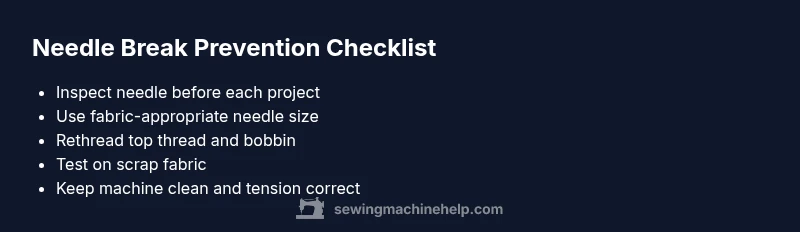
- Inspect needles and replace damaged ones.
- Match needle size to fabric type.
- Rethread and reseat to ensure correct alignment.
- Test on scrap fabric before final piece.
- Seek professional help if issues persist.