What You Need to Use a Sewing Machine: Starter Guide
Learn the essential tools, setup steps, and safety practices to start sewing with a machine. This beginner-friendly guide from Sewing Machine Help covers workspace, threading, fabrics, stitches, maintenance, and practice projects.


To start sewing with a sewing machine, gather the essentials: a sturdy workspace, a functioning machine, basic tools (spool of thread, bobbins, needles), fabric scraps, scissors, pins, measuring tools, and a safety-first mindset. This quick guide highlights setup, threading, and fabric basics to help beginners sew confidently before you start today.
What do you need to use a sewing machine
According to Sewing Machine Help, starting with a sewing machine requires more than just a device. The essentials include a sturdy workstation, a functioning machine with a clean needle, a lint-free area, a supply of thread and bobbins, appropriate needles for the fabric you plan to sew, fabric scraps for practice, and basic sewing tools. For beginners, collect a basic kit: one all-purpose thread, a few spool colors, a set of universal needles (size 14 or 15 for general cotton fabrics), scissors, pins, measuring tape, chalk or a fabric marker, seam ripper, iron, and ironing board. A manual specific to your model will save time when you need model-specific threading steps or tension adjustments. Safety should also be accounted for: tie back long hair, remove jewelry that could catch in the needle, and unplug the machine when changing needles or when not in use. This section connects the gear you buy to the skills you’ll practice in your first sessions, helping you build confidence from day one.
Choosing the right machine for beginners
Choosing a machine that fits a beginner’s needs means prioritizing reliability, ease of use, and room to grow. Look for models with simple stitch options, a clear motor on/off switch, adjustable speed, and a sturdy build that won’t vibrate excessively on your table. Weight matters: a compact machine is portable but may feel unstable on a wobbly surface, while a heavier model stays put but can be harder to move. Built-in confidence boosters like auto-threading, drop-in bobbins, and a clear bobbin case window reduce friction during setup. Safety features, such as finger guards and a properly shielded needle area, are important for learners. The Sewing Machine Help team notes that beginners benefit from a machine with straightforward threading paths and simple tension controls, which minimizes frustration and accelerates progress. As you gain skill, you can explore machines with more stitches and features, but start with the basics.
Workspace setup and safety basics
Set up in a well-lit, distraction-free area with a stable table or desk. A dedicated space helps you keep tools organized and reduces the risk of misplacing small parts like needles or bobbins. Arrange your tools within arm’s reach: scissors, pins, seam ripper, measuring tape, marking tools, and spare needles. Elevate the machine to a comfortable height so your shoulders stay relaxed; use a swivel chair or stool with good back support. Keep electricity safe: use a grounded outlet, avoid loose extension cords, and unplug the machine when changing presser feet or needles. For beginners, a simple routine at the end of each session—tidying threads, wiping lint, and rethreading the machine—prepares you for the next practice. Lighting matters: a bright lamp over your work area reduces eye strain and helps you see fabric details clearly.
Threading the machine and bobbins
Threading correctly is foundational. Start by winding a bobbin and inserting it into the bobbin case, then thread the upper path from spool to needle, following your model’s manual. Take a moment to check that the thread paths are clean and free of lint or lint buildup. If your fabric is thick or has multiple layers, you may need a larger needle or a higher presser foot pressure. Practice on scrap fabric to confirm smooth feeding and consistent stitch length. A common beginner mistake is skipping threads or causing tension issues—keep the bobbin thread feeding smoothly and avoid pulling the fabric too aggressively as you stitch. Remember, the goal in this phase is reliability and calm, not speed.
Fabric, needles, and stitch selection
Choose fabrics appropriate for beginners; the cotton family is forgiving and forgiving textiles like sateen, muslin, and lightweight cottons are ideal for practice. Use the correct needle size for your fabric: size 14 or 15 for most general cottons, size 11 for lighter knits, and larger needles for denim or heavyweight fabric. Start with a straight stitch for basic seams, then explore a basic zigzag for stretch fabrics and settings that secure raw edges. If your fabric shifts or puckers, consider using tissue paper or stabilizers for tricky prints or knits. Stitch length matters: a longer stitch is often easier for beginners, while a short stitch provides stronger seams. Recording your success and noting fabric type helps you plan future projects with confidence.
Basic stitches and settings
A beginner should master the straight stitch first, using a moderate stitch length and a balanced tension. The zigzag stitch is useful for finishing fabric edges to prevent fraying and for simple stretch seams. Practice backstitching at the start and end of seams to reinforce the seam. Most learners benefit from a slow to moderate speed at the outset—this reduces thread breaks and needle deflection. For alignment, keep seams parallel to the fabric edge and use pins or clips to hold layers together. Keep a scrap sampler nearby to test stitch types and lengths before sewing on your actual project. As you grow more comfortable, you can experiment with decorative stitches, but only after you’ve gained consistency with basics.
Troubleshooting common issues
Bird nesting (loops on the bottom) usually means incorrect threading or tension issues. Re-thread both the upper path and the bobbin, ensuring the thread is properly seated in tension discs. If you notice skipped stitches, check that the needle is fully inserted and not bent; replace it with a new one of the correct type. Fabric puckering can be solved by adjusting the tension, using a lighter needle, and using a smaller stitch length. If the machine seizes or sounds strained, turn it off, unplug, and inspect for jammed lint or threads around the bobbin area. Always test after making adjustments on scrap fabric to confirm improvement. Persisting issues may require a service check, especially if noises or resistance persist.
Maintenance and care routine
Regular cleaning keeps a sewing machine running smoothly. After every project, wipe away lint around the feed dogs and presser foot area. Oil the machine sparingly according to your model’s manual—over-oiling can cause more problems than it solves. Replace needles after every few projects or when stitching dense fabrics, as dull needles cause skipped stitches and fabric snags. Store spare bobbins and needles in a dedicated box, labeled by size, to avoid misplacing parts. Periodically check the belt, drive gears, and foot pedal for smooth operation. A quick monthly check-up and a proper storage routine help ensure your machine remains reliable for many years.
Practice plan and quick project ideas
Begin with a structured practice plan: set a goal of 15 minutes daily, spinning through threading, stitching, and seam finishing. Start with simple projects like a fabric coaster, a pillow cover, or a tote bag. These projects reinforce straight seams, turning corners, hems, and edge finishes. Keep a notebook of stitch types, fabric choices, and tensions that worked well, and compare your notes across sessions. The key is repetition with small, achievable goals, gradually increasing fabric complexity and seam length. By building a habit of daily practice, you’ll gradually reduce setup time and increase stitch consistency. Your first week can include a personal fabric sampler to track performance across different materials.
Next steps: expanding your toolkit
As you gain confidence, expand your toolkit with a few essential accessories: a selection of presser feet (zipper foot, walking foot, buttonhole foot), a seam gauge, fabric markers, and a small iron for pressing as you sew. Consider a basic beginner-friendly sewing machine cover to protect your investment. When you’re ready, explore heavier fabrics, more advanced stitches, and decorative appliques. A curated set of quality tools reduces frustrations and speeds up learning. Remember to keep safety a priority as you upgrade your toolkit, and always consult your model’s manual for compatibility requirements and recommended accessories.
Tools & Materials
- Sewing machine(Ensure it starts and runs smoothly; check for missing parts.)
- Power outlet with foot pedal(Use a properly grounded outlet; avoid daisy-chaining.)
- Thread spools (assorted colors)(All-purpose thread works for most fabrics.)
- Bobbins (empty or pre-wound)(Have a few on hand for quick changes.)
- Needles (universal size 14/15 for cotton)(Keep a mix of sizes for different fabrics.)
- Fabric scissors(Sharp blades prevent fraying and jagged edges.)
- Pins or clips(Secure layers without distorting seams.)
- Measuring tape(Metric and inches are helpful.)
- Chalk fabric marker or erasable marker(Plan hems and seams accurately.)
- Seam ripper(Fixing mistakes quickly saves fabric.)
- Iron and ironing board(Press as you sew for crisp edges.)
- Scrap fabric for practice(Use scraps to test stitches and tension.)
- Spare bobbins(Color-coded or numbered for quick changes.)
Steps
Estimated time: Total time: 20-40 minutes
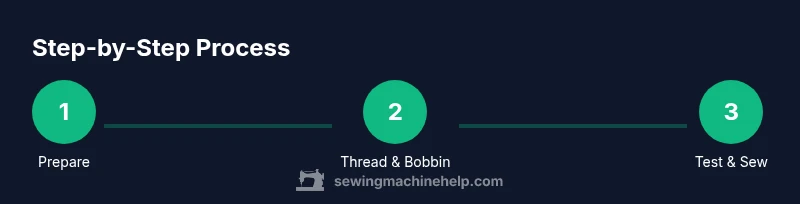
- 1
Prepare workspace and materials
Set up a clean, well-lit surface. Gather your machine, power supply, and basic tools. Arrange fabrics and notions within easy reach. This reduces interruptions and helps you stay focused on the task.
Tip: Keep a dedicated tray for small parts to avoid misplacing them. - 2
Set up machine and test stitch
Plug in the machine, turn it on, and perform a quick test on scrap fabric. Confirm stitch length and tension feel even across the fabric surface. Adjust as necessary before committing to a real project.
Tip: If stitches loop, rethread the upper thread and check needle seating. - 3
Wind and insert bobbin
Wind a bobbin with the same thread you plan to use on top. Place it in the bobbin case following your model’s path. Make sure the bobbin pulls the thread smoothly as you pull it to test.
Tip: Use a fresh bobbin when starting a new project for consistency. - 4
Thread the machine
Thread from the spool through guides to the needle, ensuring proper path and tension. Thread the needle from front to back and leave a short tail for starting the seam.
Tip: If you struggle, refer to your manual’s diagram for the exact path. - 5
Load fabric and select stitch
Place fabric under the presser foot, align edge with the guideline, and choose a basic stitch (straight stitch) with a comfortable length. Lower the presser foot to hold fabric in place before sewing.
Tip: Use pins at the edges to prevent fabric shifting. - 6
Practice seam and finish
Sew a straight seam on scrap fabric, then finish with a basic zigzag or overcast edge. Press seams to set the stitches and inspect for any skipped stitches or puckering.
Tip: Stop and adjust tension if thread nests appear.
Your Questions Answered
What is the minimum you need to start sewing with a machine?
At minimum, you need a functioning machine, a stable workspace, thread, needles, fabric, a pair of scissors, pins, measuring tools, and a seam ripper for easy fixes. A manual for your model helps with any model-specific quirks.
To start, you need a working machine, a sturdy workspace, thread, needles, fabric, scissors, pins, measuring tools, and a seam ripper. The manual is helpful for model-specific steps.
Can I learn on inexpensive fabrics and scrap materials?
Yes. Begin with muslin or other inexpensive cottons and practice seams, hems, and straight lines. Scraps help you refine technique without risking costly materials.
Absolutely—start with scraps or muslin to practice seams and hems before moving to nicer fabrics.
Which needles should I use for cotton, knits, or denim?
Use universal needles size 14/15 for cotton, size 11 for lighter knits, and larger needles (120+ or 90/14) for denim or heavy fabrics. Always match needle type to fabric to prevent skipped stitches or snags.
For cotton, try size 14/15 universal needles; for knits use size 11; for denim, go larger. Always match needle to fabric.
How often should I maintain or service my machine?
Clean lint after sessions, oil sparingly according to your manual, and replace needles every few projects. A basic monthly checkup helps catch issues early and keeps stitching consistent.
Clean lint after sewing, oil as recommended, and replace needles regularly. A monthly checkup helps keep it running well.
What are common beginner mistakes I should avoid?
Avoid skipping threading steps, using dull needles, or pulling fabric too hard. Take your time with setup, test on scraps, and gradually increase project complexity as your confidence grows.
Common mistakes include skipping thread steps, dull needles, and pulling fabric too hard. Take it slow and test first.
Watch Video
The Essentials
- Gather essential tools and fabric scrap before starting
- Set up a safe, well-lit workspace
- Thread correctly and test on scrap fabric
- Begin with straight stitches and simple seams
- Maintain and care for your machine regularly