How to Put Sewing Machine Needle In: A Practical Step-by-Step Guide
Learn how to put sewing machine needle in correctly with our educational guide. We cover needle types, orientation, safety, and a clear step-by-step process to ensure reliable stitches.


In this guide on how to put sewing machine needle in, you’ll learn how to identify the correct needle type and size, power down and prepare the machine, orient the needle properly, and secure it before sewing. You’ll also find a concise step-by-step process and safety tips to prevent bent needles, fabric damage, or jams. Follow these steps for reliable stitches and a safer sewing setup.
Why Proper Needle Insertion Matters
Incorrectly inserting a sewing machine needle can cause fabric snags, skipped stitches, and even machine damage. A correctly seated needle aligns with the fabric feed and needle plate, ensuring stitches form cleanly and the needle does not bend or break during operation. According to Sewing Machine Help, taking a few minutes to verify the needle type, orientation, and clamp setup reduces downtime and extends the life of your machine. From everyday repairs to delicate heirloom projects, proper needle insertion is a foundational skill that home sewists rely on. This section emphasizes the consequences of poor insertion and establishes a practical rule of thumb: always treat needle installation as a safety-critical setup step before you sew. You’ll gain confidence by understanding how a misinsertion manifests as skipped stitches, punched holes in delicate fabrics, or a grinding sound as the needle tries to force its way through fabric.
Understanding Needle Types and Size
Needles come in several shapes and sizes designed for specific fabrics and stitches. The most common type for general sewing is the universal needle, which works well on many woven fabrics. For knits, use a ballpoint needle to push between fibers rather than cut them. For heavy fabrics like denim or canvas, a jeans or heavy-duty needle offers extra strength. Microtex or sharp needles are ideal for fine woven fabrics and precise topstitching. When choosing size, aim for a smaller number (e.g., 70/10) for lightweight fabrics and a larger number (e.g., 90/14) for medium to heavy textiles. If you’re unsure, start with a mid-range size and adjust based on stitch quality. The Sewing Machine Help analysis shows that using the wrong needle size is a common cause of skipped stitches and fabric damage, so selecting the right kind matters as much as installation itself.
Safety First: Power Off and Prevent Injury
Before you touch any moving parts, power off the machine and unplug the power cord. Never replace a needle while the machine is plugged in or running. Remove jewelry and keep long hair secured to prevent entanglement. Use a properly lit workspace and position the machine at a comfortable height. If your model uses a needle clamp screw, have a small screwdriver nearby, but avoid forcing the needle or clamp as that can bend the bar or damage the mechanism. Following these precautions reduces the risk of injuries and ensures you can maneuver the needle with precision.
Preparing Your Needle and Machine
Begin by raising the needle to its highest position and lowering the presser foot to release tension in the needle area. If your machine has a needle plate, you may need to remove the plate or simply access the clamp from the front. Have the correct replacement needle ready, and lay out a lint-free cloth to wipe away lint or fabric fibers that could interfere with seating. Keep the work area clean so the needle clamp seats fully and the needle shaft doesn’t push the clamp out of alignment. Proper preparation makes the subsequent insertion smooth and reduces the chance of bending the needle during installation.
How to Identify the Right Needle for Your Fabric
The right needle depends on fabric type and weave. For most woven fabrics like cotton or linen, a universal needle size around 70/10 to 80/12 works well on standard stitch types. For stretch knits, use a ballpoint or stretch needle to keep fibers intact. For heavy fabrics such as denim or canvas, choose a denim or sharps needle, and consider larger sizes for thicker threads. Always check the fabric tag and test on a scrap piece before committing to the final seam. Correct needle selection minimizes skipped stitches, fabric puckering, and thread breakage.
The Correct Needle Insertion Process
Most modern machines require you to insert the needle with the flat side facing the back of the machine. Hold the needle steady, insert it fully into the needle clamp, then tighten the clamp screw securely. If you must, rotate the handwheel by hand to ensure the needle moves freely down and up without striking the needle plate. After seating, visually confirm that the needle is straight and centered in the clamp. If you notice any wobble or misalignment, remove the needle and reseat it. Model-specific details may vary, so always consult your manual for exact alignment instructions.
Common Mistakes and How to Avoid Them
- Using the wrong needle type for the fabric — always verify the fabric and stitch requirements.
- Inserting the needle with the flat side facing the wrong direction — double-check your machine’s guide; most sit with the flat side toward the back.
- Forcing a stiff or bent needle into the clamp — this can bend the shaft and create jams.
- Not tightening the clamp enough — you may see the needle wiggle or back out during stitching.
- Reusing a damaged needle — replace if the point is jagged or the shaft is bent.
- Skipping a test sew after installation — always test on a scrap piece first to confirm stitch quality and fabric handling.
Troubleshooting If Your Needle Won’t Go In
If the needle won’t insert, inspect the needle clamp area for debris and ensure you’re using the correct needle type and size. Check that you have the needle oriented correctly and that the flat side is facing the back (for most models). If the clamp screw is stuck or the needle won’t seat, stop and clean around the clamp with a soft brush. Do not force the needle; using excessive force can damage the needle bar. If the issue persists, consult the machine’s manual or contact customer support for model-specific guidance.
Maintenance Tips to Extend Needle Life
Regular maintenance keeps the needle seating consistent and prevents friction during sewing. Clean the bobbin area and feed path to remove lint and thread fragments that could interfere with seating. Replace needles after heavy projects, finishing a fabric type, or if you notice skipped stitches, thread breaks, or fabric snags. Store needles in a protective case to prevent bending. A fresh needle reduces friction, ensures clean stitches, and prolongs machine life. Remember: even high-quality needles wear out over time, so regular replacement is part of good maintenance and care.
Tools & Materials
- Sewing machine needle(Choose the correct type and size for fabric (e.g., universal 70/10 to 90/14; ballpoint for knits). Inspect for burrs or bending before insertion.)
- Small screwdriver(Use only if your model uses a screw-in needle clamp; otherwise skip.)
- Lint-free cloth(Wipe lint from the needle area to ensure a clean seating surface.)
- Scrap fabric for testing(Test stitches on similar material after seating the needle.)
Steps
Estimated time: 15-25 minutes
- 1
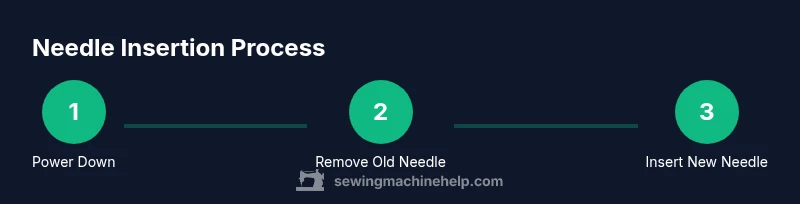
Power down and prepare
Turn off the machine and unplug the power cord. Raise the presser foot and move the needle to its highest position so you have room to access the clamp. Clear the area of loose threads and keep the workspace well-lit.
Tip: Keep fingers away from the needle area and never sew with the machine plugged in. - 2
Remove the old needle
Loosen the needle clamp screw with the appropriate tool and gently pull the old needle straight down and out. Avoid bending the needle shaft during removal. Dispose of the old needle safely in a sharps container or protective sleeve.
Tip: Take note of which side faced the fabric so you can replicate orientation with the new needle if needed. - 3
Choose the correct replacement needle
Inspect the fabric type and stitch requirements to select a universal, ballpoint, sharp, or denim needle. Confirm the needle size range (e.g., 70/10–90/14) is appropriate for your project. Do not reuse bent or dull needles.
Tip: When in doubt, start with a mid-range size to evaluate stitch formation on a scrap piece. - 4
Insert the needle into the clamp
Slide the replacement needle into the clamp, ensuring the flat side faces toward the back of the machine. Push the needle upward until it seats fully in the clamp. Check that the needle is straight and aligned with the center of the needle hole.
Tip: If the needle doesn’t go in smoothly, remove it and inspect for burrs or a misaligned clamp. - 5
Tighten the clamp and verify alignment
Tighten the clamp screw securely with the screwdriver. Gently move the handwheel toward you to ensure the needle moves freely up and down without hitting the presser foot or plate. Visually confirm the needle is centered.
Tip: A crooked needle will cause needle deflection and uneven stitches. - 6
Test on scrap fabric
Rethread if necessary and stitch a few lines on scrap fabric to verify stitch quality. Look for even tension, straight stitches, and no fabric shredding. If issues appear, recheck needle type, size, and seating.
Tip: Always test before sewing on a final project to prevent damage to your fabric.
Your Questions Answered
Do I need to remove the needle plate to install a new needle?
Most machines do not require removing the needle plate to install a needle. Access the needle clamp from the front, and consult your model’s manual for any exceptions.
Most machines don’t require removing the needle plate; you can access the clamp from the front. Check your model’s manual for exceptions.
What needle size should I use for cotton or light fabrics?
For lightweight fabrics like cotton, start with a small to mid-size needle such as 70/10 or 80/12. Always test on a scrap to verify stitch formation.
For light fabrics, try a 70/10 or 80/12 and test on a scrap first.
Why won’t the needle go into the clamp?
Check that you’re using the correct needle type and that the needle is oriented with the flat side facing the back. Ensure the clamp screw isn’t jammed and the needle is aligned.
If the needle won’t go in, verify needle type and orientation and make sure the clamp isn’t jammed.
Can I reuse a bent needle?
No. Bent needles can cause skipped stitches and fabric damage. Replace with a straight needle before sewing again.
No, never reuse a bent needle; replace it before sewing again.
How often should I replace a needle?
Replace needles after a project, when dull or bent, or when changing fabric types. For frequent sewing, change needles every 8–12 hours of sewing or with each new fabric type.
Change your needle when it dulls or after a project, or when you switch fabrics.
How should I store sewing machine needles?
Store needles in a protective case, organized by size and type, to prevent bending and rust. Avoid stacking loose needles loose in a drawer.
Keep needles in a case by size and type to prevent bending.
Watch Video
The Essentials
- Power off before changing a needle.
- Choose the correct needle type and size for fabric.
- Insert with the flat side facing the back and seat fully.
- Tighten the clamp securely and test on scrap.
- Replace bent or dull needles promptly.