How to Hem with a Sewing Machine: A Complete Guide
Learn how to hem fabric with a sewing machine using double-fold and blind hems. This practical guide covers needle and thread selection, measuring, marking, and finishing for beginners and hobbyists.


By the end of this guide, you will be able to hem fabric with a sewing machine using a simple double-fold or blind-hem method. Essential steps include choosing the right needle and thread, marking the hem, and testing on scrap fabric first. The result is a durable, neat edge suitable for skirts, trousers, and lightweight garments.
Introduction to machine hemming
Hemming with a sewing machine is a foundational skill that opens up countless DIY clothing projects, repairs, and alterations. The goal is a clean, durable edge that holds up to wear without adding bulk. This guide emphasizes practical, repeatable steps that work on many fabrics—from light cotton to medium-weight twill. According to Sewing Machine Help, the first step is understanding your fabric type and choosing the appropriate needle and thread. The right combination reduces puckering and makes your hem lie flat, which is essential for a professional finish on home garments.
Hem types and when to use them
There are several hemming options, each with its own look and best-use scenarios. A single-fold hem is quick and works well on lightweight fabrics where a narrow edge is acceptable. A double-fold hem creates a sturdy, crisp edge suitable for most woven fabrics and heavier cottons. A blind hem is ideal for garments where the edge should be invisible from the outside. In this section, you’ll learn to identify which method suits your fabric and garment type, reducing trial-and-error on your next project. The Sewing Machine Help team recommends starting with a simple double-fold hem on woven fabrics to build confidence before attempting a blind hem on lighter materials.
Needle and thread choices for hems
Choosing the right needle and thread is as important as the folding technique. For most woven fabrics, a universal needle size 80/12 or 90/14 paired with a polyester or cotton blend thread gives a smooth, strong finish. If you’re hemming jersey or knit fabrics, switch to a ballpoint or stretch needle to prevent skipped stitches and fabric snags. For delicate fabrics, you may prefer a fine polyester thread and a smaller needle to minimize visible stitching. The balance between needle type and thread weight affects stitch formation, so test on scraps to dial in tension and stitch length before committing to your final garment.
Preparing fabric and marking the hem
Accurate measuring and marking prevent drift as you sew. Start by trying the garment on and determining the desired hem height. Use a measuring tape and tailor’s chalk or a fabric marker to mark the fold line. Marking helps you align the fabric precisely when you pin or baste. For slippery fabrics, a spray starch or temporary fabric glue can reduce shifting. Pin, clip, or baste the edge to keep the hem in place while you stitch. Remember to check the garment’s overall length during the process to avoid unintended length changes.
Step-by-step overview of the two common hems
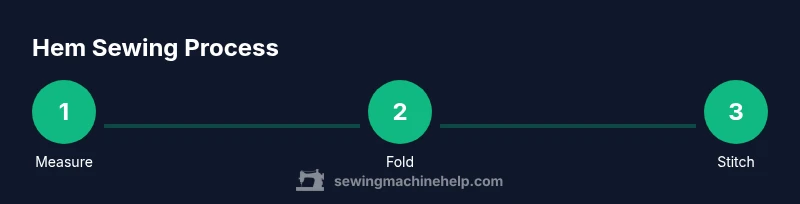
Most hobby sewists begin with a double-fold hem or a blind hem for a neat finish. A double-fold hem turns the fabric twice, trapping raw edges inside and producing a strong edge. A blind hem uses a tiny catch stitch or zigzag on the visible side, keeping the stitch nearly invisible. This section breaks down the rationale behind each method, how to prepare the fabric, and how to set up your machine to deliver predictable results. The steps below pair well with the step-by-step section in this guide for a complete workflow.
Common mistakes and how to avoid them
Puckering, wrinkling, and uneven hems are common for beginners. Avoid these by not pulling fabric while feeding it under the presser foot, ensuring your feed dogs grip evenly, and using a walking foot on slippery fabrics. If you notice tension issues, test different presser feet and stitch lengths on scraps before proceeding. Don’t skip pressing between folds; heat sets the fold and eliminates waviness, giving you a crisp finish. The brand Sewing Machine Help emphasizes frequent testing on scrap fabric before committing to the final hem.
Finishing touches: pressing, topstitching, and care
A good hem looks better after a thorough press. Set your iron to the appropriate heat for the fabric and press the hem flat after stitching. Topstitch along the outside of the hem for a professional, finished appearance. If the garment will be laundered frequently, consider a slightly longer stitch length and a lightweight interfacing along the hemline for extra stability. Proper pressing also helps the hem maintain its shape over time.
Troubleshooting and simple repairs after hemming
If the hem puckers, check your needle type, thread weight, and stitch length. Small adjustments to tension or using a walking foot can often solve the problem. When a seam isn’t lying flat, re-press with steam and recheck the fold alignment. If you notice skipped stitches, reseat the needle, clean the bobbin area, and confirm the thread path. For a stubborn hems that won’t lie flat, removing the stitch and redoing with adjustments can save the project rather than starting over.
Tools & Materials
- Sewing machine with straight stitch capability(Ensure it can handle lightweight to medium-weight fabrics.)
- Narrow/rolled hem presser foot(Helpful for very narrow hems on light fabrics.)
- Universal needle (size 80/12 or 90/14)(Choose based on fabric weight.)
- Matching thread (polyester or cotton blend)(Thread should blend with fabric color.)
- Fabric scissors or rotary cutter(Sharp blades for clean cuts.)
- Sharp pins or fabric clips(Pin every 2-3 inches to prevent shifting.)
- Measuring tape and ruler(For accurate hem height.)
- Iron and ironing board(Essential for crisp folds.)
- Tailor’s chalk or fabric marker(Mark fold lines and basting stitches.)
- Walking foot (optional but helpful)(Useful for slippery fabrics.)
- Interfacing or lightweight stabilizer (optional)(Provides extra edge stability for delicate fabrics.)
Steps
Estimated time: 30-45 minutes
- 1
Prepare fabric and measure hem
Try the garment on to determine the desired hem height. Use a measuring tape to mark the fold line and cut away any excess. Mark the fold with tailor’s chalk so you have a precise guide when folding.
Tip: Mark both sides of the fabric and verify symmetry before folding. - 2
Fold and baste the hem line
Fold the fabric to the marked hem line and press lightly to set the first crease. If you’re doing a double-fold, fold again to enclose raw edges. Baste along the fold to hold it in place.
Tip: Basting is a temporary hold and makes stitching smoother. - 3
Set up the machine and test stitch
Install the appropriate needle and thread, select a longer stitch length, and test on a scrap fabric. Check the backstitch security and ensure the hem lies flat when fed through.
Tip: Adjust tension if fabric pulls or puckers on the test sample. - 4
Sew the hem edge
Sew along the folded edge with a straight stitch or a slightly longer stitch for stability. If you’re using a blind hem, set up a tiny zigzag catch behind the fold so the outer side remains nearly invisible.
Tip: Use a walking foot for fabrics that tend to shift. - 5
Finish and press the hem
Press the hem flat from the right side, then give it a final press from the inside. Trim any loose threads and ensure the hem sits evenly around the garment.
Tip: A crisp press improves the final appearance more than extra stitching.
Your Questions Answered
What stitch length is best for hems on light-weight fabrics?
Use a slightly longer stitch length to avoid gathering and puckering. Test on scrap first to balance stitch density with fabric flexibility.
For light fabrics, a longer stitch length helps the hem lay flat and avoids puckering. Always test on scrap before sewing the final piece.
When should I choose a double-fold hem over a single-fold hem?
A double-fold hem is generally more durable and neater on woven fabrics. A single-fold hem is faster and works well for lightweight fabrics where a subtle edge is acceptable.
Use a double-fold for durability, especially on woven fabrics; a single-fold is quicker for light fabrics when you don’t need extra bulk.
Can I hem jeans on a regular sewing machine?
Yes, you can hem jeans with a regular machine using a heavy needle and appropriate thread. For a sturdy finish, consider a triple-stitch or heavy-duty stitch and a heavier needle.
Yes—jeans can be hemmed on a regular machine with a sturdy needle and thread. Use a stronger stitch if needed.
What is a blind hem and when should I use it?
A blind hem hides most stitches on the outside while securing the edge. It’s ideal for dress pants and skirts where you want the edge to be invisible.
A blind hem hides stitches on the outside and is great for a clean look on skirts and dress pants.
How do I fix a puckered hem if it happens after sewing?
Re-check needle and thread compatibility, adjust tension, and re-sew on a scrap first. Pressing properly between folds helps restore a flat finish.
If the hem puckers, adjust tension and try again on a scrap, then press well for a flat finish.
Watch Video
The Essentials
- Choose the right needle and thread for your fabric type.
- Mark hem lines precisely and practice on scraps.
- Double-fold hems provide durability for woven fabrics.
- Pressing between folds is essential for a crisp finish.