Sewing a T-Shirt with a Sewing Machine: A Beginner's Guide
A complete beginner-friendly guide to sewing a knit T-shirt with a sewing machine, covering fabric selection, pattern cutting, stitching, finishing, and care tips.


Learn how to sew a basic knit T-shirt on your sewing machine, from fabric prep to finishing touches. This guide covers pattern selection, cutting, stitching, and hemming for a durable, comfortable tee. Follow clear steps designed for beginners with stretch fabrics.
Why a T-shirt project is a great beginner project
A T-shirt is a forgiving, fast project that teaches essential sewing skills without heavy tailoring. It helps you understand knit fabric behavior, seam stability, and finishing techniques you can apply to many garments. According to Sewing Machine Help, starting with a simple tee builds confidence because you practice only a few core seams and a clean neckline. For home sewists, this project demonstrates how to translate patterns to a real garment, with room to experiment with sleeve length, neckline width, and fabric choice. By completing a basic tee, you create a solid foundation for future projects and learn to read fabric stretch, recover, and drape. The experience also reinforces safe machine operation, threading, and tension balance, which you’ll apply every time you sew a garment.
This article aims to give you a practical, error-minded approach, with step-by-step guidance and tips collected by the Sewing Machine Help Team. A tee project helps you build muscle memory—hand-eye coordination, fabric handling, and consistent seam allowances—that transfer to more complex garments later on. If you hit a snag, revisit this section and practice on scraps before adjusting your main fabric.
Understanding knit fabrics and patterns
Knit fabrics, such as cotton jersey and interlock, respond differently from woven fabrics. They stretch along the grain and recover after being stressed, so your seams must accommodate that movement. A beginner-friendly T-shirt pattern usually includes a simple body and sleeve shape with minimal darts, making layout straightforward. Based on Sewing Machine Help analysis, choosing a stable but forgiving knit helps you avoid puckering and won’t require advanced stabilizers. When selecting patterns, look for clear grainlines, sizes that match your measurement, and straight seams that minimize shaping. If you’re unsure, start with a raglan or basic tee rather than a more curved neckline.
Understanding fabric behavior—such as how knit weight and recovery influence seam allowance—will save you time and frustration. You’ll also learn to match pattern pieces to your fabric’s stretch direction, which is essential for a comfortable, long-lasting tee.
Tools, supplies, and workspace setup
A comfortable workspace with good light reduces mistakes and speeds up sewing. Keep your machine threaded with a compatible bobbin, a spare needle, and a scrap fabric for test stitches. Have sewing pins or clips, fabric scissors, and a marking tool handy. A flat, sturdy cutting surface and a dedicated area for pressing help produce crisp edges and professional finishes. The Sewing Machine Help Team recommends setting up your station in a quiet, well-lit room to minimize distractions and reduce miscuts. Using the right tools—from a ballpoint needle to a walking foot (optional)—will shorten your learning curve and improve your results. A tidy workspace also makes it easier to handle slippery knits and keep pattern pieces organized as you sew.
If you’re new to sewing, start with a single project space for fabric and tools and gradually expand as you gain confidence. Keeping a small scrap bin for practice stitches nearby will help you test tensions and stitches without wasting fabric.
Pattern selection and measurement
Begin by choosing a pattern that matches your size and style. For knit tees, look for patterns labeled as beginner-friendly and with clear neckline options. Take accurate body measurements: chest/bust, length from shoulder to hem, and desired sleeve length. Compare your measurements to the pattern’s size chart and choose the closest size, then consider adding a little ease for comfort. If you’re adjusting an older pattern, make a quick muslin or test swatch to confirm fit before cutting into your fashion fabric. Understanding ease helps prevent sleeves that are too tight or a neckline that rides up. The right pattern and size are the foundation for a tee that feels good and looks like you envisioned it.
Cutting fabric accurately
Wash and dry knit fabric per its care instructions to pre-shrink. Press the fabric to remove wrinkles and lay it flat, ensuring it lies on grain. Pin or clip pattern pieces to the fabric, then trace and cut slowly along the edges. When cutting, leave seam allowances as indicated by the pattern—usually 1 cm to 1.5 cm for knits. Transfer notches and markings to your fabric with chalk or fabric marker. Keep pieces organized by label and place them in the order you’ll sew them, which reduces misassembly and fabric wastage. Consistency here pays off during stitching and helps seams align perfectly at the shoulders and sides.
Sewing the main seams: shoulders and sides
Thread the machine with a stretch or zigzag stitch suitable for knits. Use a ballpoint or Jersey needle to avoid snagging fibers. Sew the shoulder seams first, aligning front and back pieces at the shoulder edge. Use a consistent seam allowance and backstitch at the start and end. Then sew the side seams from the bottom hem up to the underarm, keeping the fabric flat and smooth. If your fabric tends to curl, clip at curves and baste first. Test a seam on scrap before sewing the actual garment. A clean seam with minimal tension creates a comfortable tee that wears well.
Keeping your seams straight and smooth is more important than speed; take short, even stitches and consult your testing scrap if the fabric shifts.
Attaching sleeves and finishing the neckline
If your tee has set-in sleeves, sew the sleeve to the bodice along the armhole, easing the sleeve cap as needed. For a more casual tee, you may choose to attach a short-sleeve version with a single seam. Sew the neckline with a narrow band or binding, staying parallel to the cut edge and avoiding pucker. Use stay-stitching along the neckline before attaching binding to prevent stretching. Clip curves and gently press the seam allowances toward the inside. A well-finished neckline makes the whole tee look polished and comfortable on a wide range of body shapes.
Finishing hems and pressing
Finish bottom and sleeve hems with a narrow zigzag or twin-needle stitch on knits to maintain stretch. Press hems to create a crisp, professional edge and to set stitches. Use a pressing cloth to protect the fabric if your iron runs hot. After finishing, give the tee a final press to flatten any creases and inspect for loose threads or skipped stitches. Proper pressing improves fit and overall garment appearance. A neat finish also helps the tee hold its shape after washing and wearing.
Troubleshooting, care, and next steps
Common issues include fabric puckering, neckline stretching, or uneven hems. If puckering occurs, reduce tension, use a longer stitch length, and recheck needle type. If the neckline stretches during sewing, stabilize with stay-stitching and lighter fabric tension. For care, wash knits on a gentle cycle and avoid high heat; air-drying can extend fabric life. Practice with scrap fabrics to build confidence before making another tee, and experiment with sleeve length and knit weight to customize your tee. As you gain experience, you can explore more complex necklines, additional chest details, and different knit weights for seasonal variations.
Tools & Materials
- Sewing machine with knit/stretch capability(A machine capable of zigzag or stretch stitch, with appropriate presser feet)
- Ballpoint or stretch sewing needles(Size 70/10 or 80/12 depending on fabric weight)
- Thread for knits (polyester or cotton blend)(Match weight to fabric, use stretch-friendly thread)
- Fabric scissors(Sharp only for fabric; not used for paper)
- Pins or fabric Clips(For securing pieces without shifting)
- Measuring tape(For accurate body measurements and hem widths)
- Fabric marker or chalk(Trace pattern and markings)
- Pattern or pattern paper(Cut out or mark pattern pieces)
- Iron and ironing board(Press seams and hems for crisp finish)
- Interfacing for neckline (optional)(Optional if neckline needs extra stability)
- Walking foot (optional)(Helps feed slippery knits evenly)
- Rotary cutter and cutting mat (optional)(Quicker, precise fabric cutting)
Steps
Estimated time: 1-2 hours
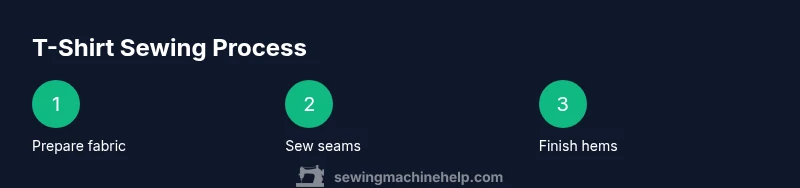
- 1
Prepare fabric and pattern
Wash and dry the knit fabric to pre-shrink it, then press to remove wrinkles. Align pattern pieces on grain, tape or pin them in place, and mark notches and key points. This step ensures pieces line up correctly during sewing.
Tip: Test a small seam on scrap fabric to check stretch and needle choice before cutting your main pieces. - 2
Set up the machine
Install a stretch or ballpoint needle and thread the machine with matching knit-friendly thread. Wind a bobbin and run a quick test stitch on a scrap to confirm stitch width and tension.
Tip: Use a shorter stitch length for knit fabrics to keep seams strong but flexible. - 3
Cut pieces accurately
Lay out pattern pieces on the fabric, keeping the grain aligned with the fabric's direction. Trace and cut with a steady hand, then label pieces and organize them in the order you’ll sew.
Tip: Leave the recommended seam allowances intact; knits often use smaller allowances for stretch. - 4
Pin pieces together
Pin or clip fabric pieces along seam lines, matching notches at shoulders, arms, and hems. Keep edges flush and avoid pinning through alignment marks.
Tip: Use clips for delicate knits to prevent leaving marks from pins. - 5
Sew shoulder seams
Sew the front and back shoulder seams with a stretch stitch. Backstitch at the start and end to secure threads. Press the seam allowances toward the back for a cleaner finish.
Tip: If fabric shifts, baste first to hold pieces together before stitching. - 6
Sew side seams
With the garment inside-out, sew the side seams from hem to underarm in one continuous line. Keep the fabric smooth and avoid pulling to prevent distortion.
Tip: If the fabric curls at the edges, clip small notches along curves to prevent tunneling. - 7
Attach sleeves
Ease the sleeve cap into the armhole, aligning notches and easing fullness as needed. Sew sleeve and bodice pieces with a consistent stitch, then press open the seam allowances.
Tip: Avoid overstretching the armhole; use gentle easing to prevent puckering. - 8
Finish neckline and hems
Finish the neckline with a narrow band or binding, staying parallel to the edge. For hems, use a twin-needle stitch or zigzag to maintain stretch and a neat finish.
Tip: Stay-stitch the neckline before attaching any binding to minimize stretching. - 9
Final press and check
Give the entire tee a final press, trim any loose threads, and try it on to check fit. Make minor adjustments as needed and review seam allowances.
Tip: A thorough final press will make the tee look professionally finished.
Your Questions Answered
What type of fabric is best for beginner T-shirts?
Cotton jersey or lightweight knits are the easiest to work with for beginners. They stretch modestly and recover well, making seams easier to handle. Avoid heavy knits at first to minimize difficulty and puckering.
Cotton jersey or light knits are ideal for beginners, as they stretch and recover easily, making the first tee forgiving.
Is a walking foot necessary for knits?
A walking foot is not required, but it helps feed slippery knits evenly and reduces shifting. If you don’t have one, use slower speed and hold the fabric gently to maintain control.
Not always necessary, but a walking foot helps with slippery knits. If you don’t have one, sew slowly and guide the fabric evenly.
What needle should I use for knits?
Use a ballpoint or jersey needle designed for stretch fabrics. This minimizes skipped stitches and snagging while maintaining fabric integrity.
A ballpoint needle is best for knits; it slides between fibers rather than cutting them.
How do I prevent neckline stretching?
Stay-stitch along the neckline before attaching any binding to stabilize the edge. Use a narrow binding and sew with a gentle stitch to avoid distortion.
Stay-stitch the neckline first to keep it from stretching. Use a narrow binding to finish neatly.
How should I finish the hems for knit tees?
Finish hems with a twin-needle or a zigzag stitch to preserve stretch. Press the hems cleanly and avoid folding too many times to prevent stiffness.
Twin-needle hems look neat and keep the fabric stretchy. Press well for a smooth finish.
Watch Video
The Essentials
- Choose a beginner-friendly knit fabric with clear stretch behavior.
- Set up machine for knits with proper needle and stitch choice.
- Cut, sew, and press methodically for a clean tee.
- Finish with appropriate hems and neckline stabilization for longevity.